My life will be complete the day that I read in a high fantasy novel — in place of, “She felt her breasts bouncing underneath her tunic as she hurried across the courtyard” or whatever, where a female character spends the whole walk thinking about her own boobs for no reason — a male character walking across a courtyard thinking to himself, “He felt his testicles jostling in his codpiece as he hurried across the courtyard.”
“It must be cooler weather than I realized,” he thought to himself, “they’re awfully small and high up today …”
— Jim C Hines continues to experiment with gender-swapping sf/f clichés, quoted in file 770
July Crit Mass
Just for a change (OK, because no-one offered a talk!), we thought we’d try a panel discussion. So if you are turning up at Kappys for the July meeting (Wed the 6th, 7pm), be prepared to talk for five minutes on one of the following:
- The best SF I read last year
- My favourite forgotten author
- The SF book that made me a fan of the stuff.
Our calendar for the rest of the year looks a trifle sparse
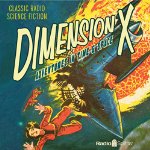
- Aug: Roman on Audio SF: audiobooks, radio dramas and podcasts;
- Sept: TBA
- Oct: TBA
- Nov: TBA
- Dec: Dinner
Those “TBA” above mean that no-one has volunteered to give a talk! If there’s no interest, we will finish the year after the August meeting. If you want to volunteer a talk, or discuss how to give a talk, contact Adam or Roman, or leave a comment here.
ansible
One of the most entertaining news bulletins from the SF world is ansible, edited by the amazing Dave Langford. It is, of course, named after the FTL communications device invented by U K LeGuin, the ansible.
Here, from the latest issue of ansible is a wonderful contribution from Ursula herself:
Ursula K. Le Guin broadens our scope: ‘I don’t know if Thog is interested in opening his Masterclass to anyone outside science fiction, let alone the writer some people call The Master. But I know he likes the more violent anatomical disjunctions and peculiarities, and humbly offer him this one, from Chapter 30 of The Awkward Age by Henry James (p.301 in the 1981 Penguin Modern Classics edition):
“‘But we have, you know, as Van says, gone to pieces’ she went on, twisting her pretty head and tossing it back over her shoulder to an auditor of whose approach to her from behind, though it was impossible she should have seen him, she had visibly, within a minute, become aware.”
‘I can’t tell you the joy this passage gave me, as by page 301 I was in danger of tossing the book back over my shoulder into a fireplace of whose location, though I might be uncertain, I had become willing to imagine, as offering me a final, if less than admirable, escape from endless thickets of clauses introducing incomprehensibly allusive conversations carried on by disagreeable people, among whom the owner of the pretty head is, perhaps, the most tedious.’ (6 May)
— ansible 347 at http://news.ansible.uk/a347.html
Diversity on TV SF
Earlier this year, UCLA released a report, 2016 Hollywood Diversity Report: Busine$$ As Usual?, which found that “Films with relatively diverse casts enjoyed the highest global box office receipts and the highest median return on investment.”, while shows that featured higher levels of diversity amidst their casts tended to do much better with the highly sought after demographics: “Median 18-49 view ratings (as well as median household ratings among whites, black Latinos and Asian Americans) peaked for broadcast scripted shows featuring casts that were greater than 40 percent minority.”
— Andrew Liptak, io9 “How Syfy is Leading The Charge With Imagining Diverse Futures”
June 1st: Steampunk to Atompunk
Adam Jenkins is speaking at Crit Mass this Wednesday, June 1st, 7pm at Kappys.

Paul Shapera’s New Albion sequence, the first part of which was released in 2012, is a rock opera/concept album exploring the lives of the MacAlister family over multiple generations. The first album, The Dolls of New Albion, is set in a Steampunk age; the second, The New Albion Radio Hour, is an interesting rendering of Dieselpunk; and the third, The New Alibion Guide to Analogue Consciousness, completes the operatic trilogy through Atompunk.
With the late 2015 release of the final piece, now seems like a good time to explore Shapera’s work.
Heard it on the Grapevine
Aubible has an excellent collection of audio books. A good place to start is the Neil Gaiman curated selection. This includes classics and modern works by many of my favourite authors, including Avram Davidson, M John Harrison and Robert Sheckley.
Some particularly good audiobooks include readings by the author and full cast recordings. Here are five of the best.
This is the complete collection of Doctor Englebert Esterhazy’s adventures in the Triune Monarchy of Scythia- Pannonia-Transbalkania, located in a 19th-century Europe between the Wars.

Ellen Kushner turns out to be a great reader of her own work. All three of the Riverside books are available, with a full cast who ably bring the stories to life.

A fine tale of a young witch growing up.

A very disturbing story of a schizophrenic dealing with disturbances in reality, and possible intrusions of mythic creatures.
Yes, all of the His Dark Materials trilogy are available. Not only is Pullman an excellent reader of his own work, but (as with the Kushner) a full cast enlivens the narrative — the attack on the polar bear stronghold is beautifully evoked.
Storybundle bargains
If you’re quick, and are interested in ebooks, you might catch the bargain currently available at storybundle. Pay what you like, but you could get access to download up to eight excellent story collections. I think the Pat Murphy alone is worth the bundle.
The offer should be good until June 1st
The Green Leopard Plague by Walter Jon Williams
“In this provocative, entertaining collection of nine reprints, Williams (Implied Spaces) brings together tales of the College of Mystery as well as other explorations of the gray region where psyche and technology meet. ”
– Publisher’s Weekly Starred Review
Women Up to No Good by Pat Murphy
“Reading Pat Murphy’s outstanding science fiction is always mind-expanding, the equivalent of traveling to other worlds from the comfort of my armchair.”
– Ravenswood Reviews
Strange Ladies: 7 Stories by Lisa Mason
“Lisa Mason might just be the female Phillip K. Dick. Like Dick, Mason’s stories are far more than just sci-fi tales, they are brimming with insight into human consciousness and the social condition….a sci-fi collection of excellent quality….you won’t want to miss it.”
– The Book Brothers Review Blog
Collected Stories by Lewis Shiner
“These 41 powerful stories cover Shiner’s career across three decades and multiple genres, showcasing hard-edged, often political genre fiction at its finest….”
– Publishers Weekly (starred review)
Six Stories by Kathe Koja
“Koja’s provocative storylines and evocative prose combine reality with invention, the supernatural with the everyday.”
– New York Times Book Review
What I Didn’t See: Stories by Karen Fowler
“One of those writers who can write an almost thoroughly mainstream realistic story and nearly convince us we’re reading SF, or write an SF story and convince us we’re reading mainstream realism.”
– Locus
Errantry: Strange Stories by Elizabeth Hand
“The magic in Elizabeth Hand’s short fiction can usually be found at its edges, just slightly out of reach. It’s there for a moment, but it’s hard to see without squinting. ”
– Tor.com
Wild Things by C.C. Finlay
“[T]hese stories show Finlay exploring a variety of genres, bringing freshness and intelligence to them all… an absorbing and often surprising collection.”
– Booklist
Happy Ninetieth Anniversary, Amazing Stories
Science fiction its modern sense can be said to have begun in April 1926, with the publication of the first issue of Amazing Stories, under the editorship of Hugo Gernsback. Certainly genre magazine science fiction started then in the sense of having a magazine dedicated to science fiction stories. Previously science fiction had appeared across a wide range of magazines and publications, Amazing Stories was the first magazine to specifically concentrate on publishing science fiction. This is a somewhat controversial position as there are other reasonable origins for the field of science fiction. History is rarely simple.
For example, Gernsback was promoting what he called “scientifiction” and not “science fiction”. Soon his scientification would become better known as science fiction. I had always assumed that stf (the abbreviation for scientifiction) was soon replaced by the easier to say science fiction, asnd this happened as early as the 1930’s. Recently when I was skimming through issues of science fiction magazines from the nineteen-forties and nineteen-fifties I found a 1952 issue of, what may have been, Startling Stories promising that it delivered the “Best in Scientifiction” for its readers. This wasn’t a single instance, scientifiction hung around around longer than expected. So, stf as a term was still in currency nearly twenty-seven years after the first Amazing Stories. Other magazines of around the same time were also claiming to publish scientifiction, but, of course, not all. Magazines like Astounding, Galaxy, and, naturally, the Magazine of Fantasy and Science Fiction clearly saw themselves as venues for science fiction.
Amazing Stories, while it was the first dedicated science fiction magazine, it wasn’t the first pulp science fiction magazine. Pulp magazines were cheap, mass circulation magazines using poor quality paper. The magazines in Gernsback stable of publications, Gernsback was first and foremost a publisher of technical magazines for popular consumption. The titles of which appear at the bottom of the cover page. These weren’t pulp magazines, so neither was Amazing Stories. The honour for the first pulp science fiction magazine goes to Astounding Stories of Super-Science which was first published in 1929, which was, according to my investigations, the second science fiction magazine proper. Interestingly, Weird Tales, which is usually thought of as a magazine of supernatural fantasy and horror was also a publisher of science fiction too. A case in point Edmond Hamilton’s Interstellar Patrol series appeared in first in Weird Tales, beginning in the late 1920s.
What did Gernsback offer his readers in April 1926? A glance at the table of contents reveals the following. Beginning with the serial in two parts of Off on a Comet (Jules Verne; 1/2), The New Accelerator (H. G. Wells), The Man From the Atom (G. Peyton Wertenbaker), The Thing From—”Outside” (George Allan England), The Man Who Saved the Earth (Austin Hall), and The Facts in the Case of M. Valdemar (Edgar Allan Poe).
It’s an interesting mix of mainly reprints and a couple of new stories by writers whose fame time has extinguished. Not necessarily the strongest beginning, but science fiction was in the process of being born and it had a long to way to go before it would find its feet. However, issue number two has “The Runaway Skyscraper” by Murray Leinster. An author whose reputation hasn’t entirely been eclipsed and who continued writing for many decades afterwards. That might be a good point for the start of the road from scientifiction to what has become science fiction and which continues to transform and create itself anew right up to the right and into the future.
This began ninety years ago. So, happy anniversary, ninety years young, Amazing Stories, to the birth of one of science fiction’s many origins and the likely foundation of what science fiction culture has become.
Ditmar Awards 2016
Winners in each category highlighted in bold yellow
Best Novel
The Dagger’s Path, Glenda Larke (Orbit)
Day Boy, Trent Jamieson (Text Publishing)
Graced, Amanda Pillar (Momentum)
Lament for the Afterlife, Lisa L. Hannett (ChiZine Publications)
Zeroes, Scott Westerfeld, Margo Lanagan, and Deborah Biancotti (Simon and Schuster)
Best Novella or Novelette
“The Cherry Crow Children of Haverny Wood”, Deborah Kalin, in Cherry Crow Children (Twelfth Planet Press)
“Fake Geek Girl”, Tansy Rayner Roberts, in Review of Australian Fiction, volume 14, issue 4 (Review of Australian Fiction)
“Hot Rods”, Cat Sparks, in Lightspeed Science Fiction & Fantasy 58 (Lightspeed Science Fiction & Fantasy)
“The Miseducation of Mara Lys”, Deborah Kalin, in Cherry Crow Children (Twelfth Planet Press)
“Of Sorrow and Such”, Angela Slatter, in Of Sorrow and Such (Tor.com)
“The Wages of Honey”, Deborah Kalin, in Cherry Crow Children (Twelfth Planet Press)
Best Short Story
“2B”, Joanne Anderton, in Insert Title Here (FableCroft Publishing)
“The Chart of the Vagrant Mariner”, Alan Baxter, in Fantasy & Science Fiction, Jan/Feb 2015 (Fantasy & Science Fiction)
“A Hedge of Yellow Roses”, Kathleen Jennings, in Hear Me Roar (Ticonderoga Publications)
“Look how cold my hands are”, Deborah Biancotti, in Cranky Ladies of History (FableCroft Publishing)
Best Collected Work
Bloodlines, Amanda Pillar (Ticonderoga Publications)
Cherry Crow Children, Deborah Kalin, edited by Alisa Krasnostein (Twelfth Planet Press)
Cranky Ladies of History, Tansy Rayner Roberts and Tehani Wessely (FableCroft Publishing)
Letters to Tiptree, Alexandra Pierce and Alisa Krasnostein (Twelfth Planet Press)
Peripheral Visions: The Collected Ghost Stories by Robert Hood (IFWG Publishing Australia)
Best Artwork
Cover art, Rovina Cai, for “Tom, Thom” (Tor.com)
Cover art, Kathleen Jennings, for Bloodlines (Ticonderoga Publications)
Cover and internal artwork, Kathleen Jennings, for Cranky Ladies of History (FableCroft Publishing)
Cover, Shauna O’Meara, for The Never Never Land (CSFG Publishing)
Illustrations, Shaun Tan, for The Singing Bones (Allen & Unwin)
Best Fan Publication in any Medium
The Angriest, Grant Watson
The Coode Street Podcast, Jonathan Strahan and Gary K. Wolfe
Galactic Suburbia, Alisa Krasnostein, Alexandra Pierce, and Tansy Rayner Roberts
SF Commentary, Bruce Gillespie
The Writer and the Critic, Kirstyn McDermott and Ian Mond
Best Fan Writer
Tsana Dolichva, for body of work, including reviews and interviews in Tsana’s Reads and Reviews
Foz Meadows, for body of work, including reviews in Shattersnipe: Malcontent & Rainbows
Ian Mond, for body of work, including The Hysterical Hamster
Alexandra Pierce, for body of work, including reviews in Randomly Yours, Alex
Katharine Stubbs, for body of work, including Venture Adlaxre
Grant Watson, for body of work, including reviews in The Angriest
Best Fan Artist
Kathleen Jennings, for body of work, including Illustration Friday
Belinda Morris, for body of work, including Belinda Illustrates
Best New Talent
Rivqa Rafael
T. R. Napper
D. K. Mok
Liz Barr
William Atheling Jr. Award for Criticism or Review
Letters to Tiptree, Alexandra Pierce and Alisa Krasnostein (Twelfth Planet Press)
The Rereading the Empire Trilogy review series, Tansy Rayner Roberts
The Reviewing New Who series, David McDonald, Tansy Rayner Roberts and Tehani Wessely
“Sara Kingdom dies at the end”, Tansy Rayner Roberts in Companion Piece (Mad Norwegian Press)
“SF Women of the 20th Century”, Tansy Rayner Roberts
Squeeing over Supergirl, David McDonald and Tehani Wessely series
May: Guest Nick Falkner

Nick is our guest speaker for the May Critical Mass (7pm at Kappys, Wednesday 4th May). He’s going to talk about his first novel, The Curse of Kereves Dere, and perhaps provide a few hints about electronic publishing.
You must be logged in to post a comment.