Moonscapes story bundle

The Moonscapes Bundle, curated by Dean Wesley Smith, was born out of Fiction River: Moonscapes, a volume of his bi-monthly anthology series. He says: “When editing the volume, I got lucky to find eleven great hard-sf stories from eleven top science fiction writers. Over seventy thousand words of fiction. I was and still am very proud of the volume.

“But as the years went on, I wanted to keep the idea of Moonscapes going. Then the chance to do this science fiction bundle came up and working it around Fiction River: Moonscapes just seemed to be a logical idea. Six of the authors in Fiction River: Moonscapes had hard science fiction novels that would fit in this bundle. And three other great sf writers, including Kevin J. Anderson, joined the fun. So nine hard science fiction novels plus the volume of Fiction River: Moonscapes.”

You have about 21 days to pick up this bundle of ebooks, in both epub and mobi formats.

More details: https://storybundle.com/moonscapes


Best SF movies of C21

Indiewire has produced this list of best 25 SF movies of this century.

(in alphabetical order)

  • “Arrival” (2016)
    “Attack the Block” (2011)
    “Children of Men” (2006)
    “Coherence” (2013)
    “Dawn of the Planet of the Apes” (2014)
    “District 9” (2009)
    “Donnie Darko” (2001)
    “Edge of Tomorrow” (2014)
    “Eternal Sunshine of the Spotless Mind” (2004)
    “Ex Machina” (2014)
    “Hard to Be a God” (2013)
    “Her” (2013)
    “Inception” (2010)
    “Looper” (2012)
    “Minority Report” (2002)
    “Moon” (2009)
    “Paprika” (2006)
    “Primer” (2004)
    “Snowpiercer” (2013)
    “Sunshine” (2007)
    “The Host” (2013)
    “Under the Skin” (2013)
    “Upstream Color” (2013)
    “WALL·E” (2008)
    “World of Tomorrow” (2015)

Go to indiewire to see the details.

An Obsession with Belisarius?

“It’s strange that science fiction and fantasy are obsessed with retelling the story of Belisarius, when the mainstream world isn’t particularly interested. Robert Graves wrote a historical novel about him in 1938, Count Belisarius, and there’s Gillian Bradshaw’s The Bearkeeper’s Daughter (1987), but not much else. Whereas in genre, we’ve had the story of Belisarius retold by Guy Gavriel Kay, David Drake (twice) and Chelsea Quinn Yarbro, and used by L. Sprague de Camp, John M. Ford, Jerry Pournelle, Robert Silverberg, and Isaac Asimov. So what is it about this bit of history that makes everyone from Asimov to Yarbro use it? And how is it that the only place you’re likely to have come across it is SF?”

— Jo Walton, Why is Genre Fiction Obsessed with Belisarius?, Tor.com

As it was THEN, so it is NOW

I was struck by the following passages from Hansen’s THEN (p124, Ansible Editions):

Relations between fandom’s sercon and fannish wings were not always harmonious, but by 1954 external developments, in the form of SF’s increasing popularity were beginning to affect them both. Writing in HYPHEN, Bill Temple observed that:
“Today SF batters you with more magazines and books than you could hope to read if you did nothing else all day. It’s all over the cinema and TV screens, and drools from the radio. It infests advertisment hoardings, strip cartoons, kids’ comics, toy-shops, literary weeklies, and pantomimes. It’s even been mentioned at The Globe.
We always wanted to spread SF, and now, God help us, we’ve done it. And somehow in the stampede the magic has been trampled underfoot.”
To which Willis replied:
“Fandom does seem to be passing through a period of self-evaluation at the moment. For years its ostensible purpose was to promote science fiction; but now that SF has been promoted it snubs its old friends and scorns its humble beginnings. Fans are now ‘unrepresentative’, an esoteric clique… and the serious constructive fans have been left as high and dry as the rest of us — in fact more so, because they have lost their entire reason for existence.”

The White Horse

“In that prosaic room, in that very ordinary pub, was going on the most advanced thinking in this country. When lists are made of the best British writers since the war, they do not include Arthur C Clarke, nor Brian Aldiss, nor any of the good science fiction writers. It is conventional literature that has turned out to be provincial.”
— Doris Lessing, commenting on a visit to The White Horse [*] gathering circa 1952, in volume 2 of her autobiography

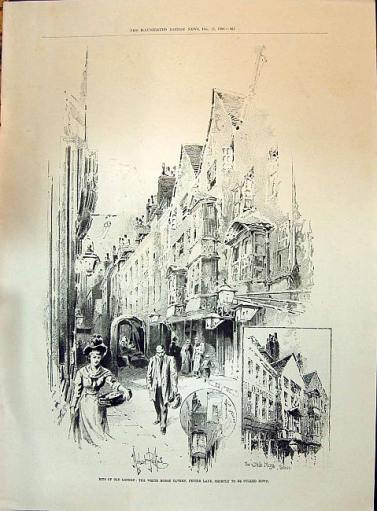
WhiteHorse1896
The White Horse in 1896: 50 years before fans arrived

[*] the London Circle of sf fans gathered at The White Horse in Fetter Lane — it appeared as the The White Hart in the Clarke short story collection Tales from The White Hart

The Work of mad Scientists

Speculative fiction and new forms of art and storytelling and innovations in technology and computing are engaged in the work of mad scientists: testing future ways of living and seeing before they actually arrive.  We are the early warning system for the culture.  We see the future as a weatherfront, a vast mass of possibilities across the horizon, and since we’re not idiots and therefore will not claim to be able to predict exactly where lightning will strike – we take one or more of those possibilities and play them out in our work, to see what might happen.  Imagining them as real things and testing them in the laboratory of our practice – informed by our careful cross-contamination by many and various fields other than our own — to see what these things do.

Warren Ellis,  Orbital Operations, April 10th

True Natures

I’ve got news for you—the history of the Star Wars galaxy is precisely that. Jedi versus Sith, for thousands upon thousands of years, locked into a war they created for themselves and never seem capable of eradicating. The Sith are gone in name, but the Knights of Ren remain. Someone has to stop them… but maybe that someone shouldn’t be a Jedi.

— Emily Asher-Perrin, The “True Nature of the Force” is Way More Complicated Than You Think

Stalker released!

Good news from Andrew Liptak (http://www.theverge.com/2017/4/19/15361450/criterion-collection-andrei-tarkovsky-stalker-hd-restoration):

Stalker

Cinephiles, rejoice! Criterion Collection will be adding a major science-fiction classic to its roster [July 18th]: a restored version of Stalker, directed by Solaris filmmaker Andrei Tarkovsky.

Based off the 1971 Russian science-fiction novel Roadside Picnic by Arkady and Boris Strugatsky, Stalker was originally released in 1979. The film follows a man known as “the Stalker” as he leads an expedition into a mysterious, forbidden area known as “The Zone.” In the book, the mysterious Zone is the location of an alien visitation decades before the story, littered with fantastic pieces of technology and dangers; in the film, its origins are more obscure. But in both cases, reality there is distorted, and somewhere inside is a room that will grant visitors’ innermost desires. The journey to get there is physically and philosophically arduous, and it tests the trio of men traveling there.


Mercury in transit

There are a few films which may be of interest to SF fans in the new season of cinematheque (screenings at the Mercury Cinema):

  • The Time Guardian, Thurs 27th April, 7pm — a dreadful Australian SF movie (1987) which features Carrie Fisher.
  • McCabe and Mrs Miller (2013) Thurs 4th may — Robert Altman with Leonard Cohen songs, an interesting haunting western.
  • Pride and Prejudice and Zombies (2016) Mon 22 May — the only way we could get Adam to watch Pride & Prejudice!
  • Devil in a Blue Dress (1995) Thursday 25 May  — Denzel Washington brings to life Walter Mosley’s PI, Easy Rawlins, as part of a Literary Crime subseason featuring Ripley’s Game (May 29th) and In Cold Blood (June 1st)
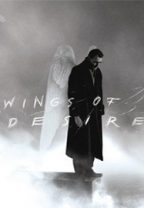
  • Wings Wings of Desire (1987)  Mon, June 19th — the wonderful Bruno Gantz as an Angel in modern Berlin, much better than the American remake. Part of a Wim Wenders mini-season

Full details on the Mercury Cinema website:
http://mercurycinema.org.au/products/our-films/cinematheque/2017-season-1/

Ditmar Awards!

Voting is now open, and can be done online here http://ditmars.sf.org.au/2017 or you can email ditmars@sf.org.au. Voting closes at 11:59pm Sunday 14th May EST, and you must be either a full or supporting member of Continuum 13, or a member of Contact 16 and eligible to vote in the 2016 awards.

Best Novel

  • The Grief Hole, Kaaron Warren, IFWG Publishing Australia
  • The Lyre Thief, Jennifer Fallon, HarperCollins
  • Squid’s Grief, D.K. Mok, D.K. Mok
  • Vigil, Angela Slatter, Jo Fletcher Books
  • The Wizardry of Jewish Women, Gillian Polack, Satalyte Publishing

Best Novella or Novelette

  • “All the Colours of the Tomato,” Simon Petrie, in Dimension6 #9
  • “By the Laws of Crab and Woman,” Jason Fischer, in Review of Australian Fiction, Vol 17, Issue 6
  • “Did We Break the End of the World?”, Tansy Rayner Roberts, in Defying Doomsday, Twelfth Planet Press
  • “Finnegan’s Field,” Angela Slatter, in Tor.com
  • “Glass Slipper Scandal,” Tansy Rayner Roberts, in Sheep Might Fly
  • “Going Viral,” Thoraiya Dyer, in Dimension6 8

Best Short Story

  • “Flame Trees,” T.R. Napper, in Asimov’s Science Fiction, April/May 2016
  • “No Fat Chicks,” Cat Sparks, in In Your Face, FableCroft Publishing
  • “There’s No Place Like Home,” Edwina Harvey, in AntipodeanSF 221

Best Collected Work

  • Crow Shine, Alan Baxter, Ticonderoga Publications
  • Defying Doomsday, Tsana Dolichva and Holly Kench, Twelfth Planet Press
  • Dreaming in the Dark, Jack Dann, PS Publishing
  • In Your Face, Tehani Wessely, FableCroft Publishing

Best Artwork

  • cover and internal artwork, Adam Browne, for The Tame Animals of Saturn, Peggy Bright Books
  • illustration, Shauna O’Meara, for Lackington’s 12

Best Fan Publication in Any Medium

  • 2016 Australian SF Snapshot, Greg Chapman, Tehani Croft, Tsana Dolichva, Marisol Dunham, Elizabeth Fitzgerald, Stephanie Gunn, Ju Landéesse, David McDonald, Belle McQuattie, Matthew Morrison, Alex Pierce, Rivqa Rafael, Tansy Rayner Roberts, Helen Stubbs, Katharine Stubbs and Matthew Summers
  • The Coode Street Podcast, Jonathan Strahan and Gary K. Wolfe
  • Earl Grey Editing Services (blog), Elizabeth Fitzgerald
  • Galactic Chat, Alexandra Pierce, David McDonald, Sarah Parker, Helen Stubbs, Mark Webb, and Sean Wright
  • Galactic Suburbia, Alisa Krasnostein, Alex Pierce, and Tansy Rayner Roberts
  • The Writer and the Critic, Kirstyn McDermott and Ian Mond

Best Fan Writer

  • James ‘Jocko’ Allen,
  • Aidan Doyle
  • Bruce Gillespie
  • Foz Meadows
  • Tansy Rayner Roberts

Best Fan Artist

  • Kathleen Jennings, for body of work, including Illustration Friday series

Best New Talent

  • T R Napper
  • Marlee Jane Ward

William Atheling Jr Award for Criticism or Review

  • Kat Clay for essays and reviews in Weird Fiction Review
  • Tehani Croft & Marisol Dunham, for Revisiting Pern: the Great McCaffrey Reread review series
  • Tsana Dolichva, for reviews, in Tsana’s Reads and Reviews
  • Kate Forsyth, for The Rebirth of Rapunzel: A Mythic Biography of the Maiden in the Tower, FableCroft Publishing
  • Ian Mond, for reviews, in The Hysterical Hamster
  • Alexandra Pierce, for reviews, in Randomly Yours, Alex
  • Gillian Polack, for History and Fiction: Writers, Their Research, Worlds and Stories, Peter Lang