Stop me if you’ve heard this: a master of time rebels against the ruling council, steals a timeship and sets out to right the wrongs of history with a motley assortment of companions….

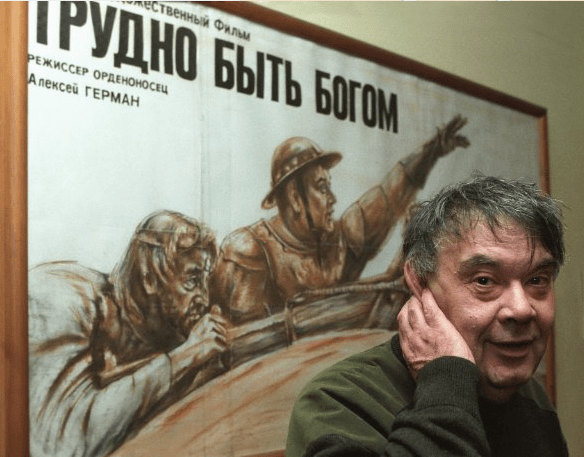
makes you wonder if he’s auditioning for the role of Time Lord…
fans of sf, fantasy, horror & whimsy
Stop me if you’ve heard this: a master of time rebels against the ruling council, steals a timeship and sets out to right the wrongs of history with a motley assortment of companions….

makes you wonder if he’s auditioning for the role of Time Lord…
I was reading Adam Roberts’ critical text on SF, Science Fiction, when I came across this quote from Kingsley Amis, one of the old school authors and editors, commenting on the British New Wave from the 60s:
The new mode abandoned the hallmarks of traditional science fiction; its emphasis on content rather than style and treatment, its avoidance of untethered fantasy and its commitment instead to logic, motive and common sense…[instead] in came shock tactics, tricks with typography, one-line chapters, strained metaphors, obscurities, obscenities, drugs, Oriental religions and left-wing politics.
(Amis 1981: The Golden Age of Science Fiction, p22)
Just a gentle reminder that we have Lucy Sussex as guest speaker on march 2nd. She’s here for the Writers Week, and has kindly agreed to talk to us about her recent book Blockbuster!: Fergus Hume and the Mystery of a Hansom Cab. At the turn of the 19th century, The Mystery of a Hansom Cab became an international publishing sensation. In many ways, the story of the publisher is equally fascinating. Turn up at 7pm at Kappys to find out the intriguing details!

Lucy Sussex is the author of a number of novels and short stories; she has worked as a reviewer for The Age, and as an academic, she is a Fellow at the Federation University Ballarat, and La Trobe University.
In 1989 she won her first Ditmar Award for her short story “My Lady Tongue”. She won three further Ditmars, for her novel The Scarlet Rider (1997), novella “La Sentinelle” (2004), and short story “Absolute Uncertainty”. “Merlusine” won the Aurealis Award for Best Fantasy Short Story in 1998, and “La Sentinelle” won an Aurealis Award in 2003. In 2008 her short story “Mist and Murder” won a Sir Julius Vogel Award.
She was a judge for the international James Tiptree, Jr. Award award in 1995, and has subsequently judged the Age, Victorian Premier’s and ASAL gold medal awards.


It’s impossible to speak of contemporary Chinese science fiction without starting with Liu Cixin, who has been sometimes described as a “neo-classical” writer whose novels and short stories are compared to the works of Isaac Asimov or Arthur C. Clarke, but with a modern, “Chinese” sensibility. Liu has won China’s most prestigious literary genre awards multiple times, and his masterpiece, the Three-Body trilogy (consisting of The Three-Body Problem, The Dark Forest, and Death’s End), has been credited for single-handedly gaining Chinese science fiction respectability among the Chinese literary establishment. A massive work spanning the time from China’s Cultural Revolution to the end of the universe, the trilogy describes an alien invasion of Earth triggered by a Mao-era METI project, and the consequent scattering of humanity to the stars. Liu’s short fiction is similarly characterized by a grand imaginative scope, though he often roots his stories in the lives of China’s ordinary citizens who live far from the big cities and have little wealth.
The other two writers, Wang Jinkang and Han Song, are quite different. Wang Jinkang’s works are very much concerned with the intersection of science and ethics. His recent novel The Ant Life, for instance, features a young scientist who succeeds in creating a utopia by infecting the people of an isolated community with hormones extracted from ants to replace their selfish desires with altruistic ones directed to the good of the community as a whole. As one might imagine, this experiment backfires and unintended consequences come to dominate. Many of Wang’s stories are infused with this flavor of sociological SF.
Han Song, on the other hand, focuses his acerbic wit on the “science fictional” excesses of modern development, particularly as manifested in China’s breakneck rush toward “progress.” His High-Speed Rail, for instance, uses China’s high-speed train network as a postmodern metaphor to explore the rapid and grotesque devolution (or perhaps unmooring) of values in contemporary China through a series of surreal, dark, violent images.
— Ken Liu, writing in Clarkesworld on Contemporary Chinese SF
Critical Mass: A look at Leviathan Wakes February 3, 2016 at 7:00 pm – 8:30 pm Kappy’s Cafe, 22 Compton St, Adelaide SA 5000, Australia
Roman talks about why The Expanse is the new hot thing on TV by returning to the source — a look at why Leviathan Wakes is interesting.
Note the new time & place for Critical Mass!
“an anomaly of the emergence of science fiction in China that while the genre associated its origins with the translations of western imports, ‘science fiction’ (kexue xiaoshuo) began to appear regularly in China as a generic category associated with specific stories before it did so in the English-language press (circa 1904).”
— Nathanial Isaacson, quoted in a very interesting article on the history of SF in China

Lucy Sussex will be in Adelaide for Writers’ Week, and she has kindly agreed to talk to Critical Mass. At the March 2nd meeting, she’ll be talking about The Mystery of the Hansom Cab. Or to be precise, she’ll be talking about her new book,
Blockbuster!: Fergus Hume and the Mystery of a Hansom Cab.

The Expanse is an American space opera/mystery science fiction drama television series on Syfy, based on the series of novels by James S. A. Corey [ collaborators Daniel Abraham and Ty Franck]. Set in a future where humanity has colonized the Solar System, but doesn’t have FTL spaceships, it follows police detective Miller, ship’s officer Jim Holden and his crew as they unravel a conspiracy that threatens peace across the System and the survival of humanity. The series premiered on streaming services on November 23, 2015, and on Syfy on December 14, 2015.
It’s a familiar setup: Earth has colonised Mars and the asteroids are mined for water and metals. There’s tension between the governments, and a potential revolution brewing.
The TV series looks fantastic, with an interesting Belter patois suggesting the separate development in the different environments. The story is dense, but apparently follows the source material closely.
looks like serious SF on TV again!
At present, The Expanse consists of five main novels and four shorter works (two prequel short stories, one prequel novella and one novella set between Caliban’s War and Abaddon’s Gate). Four more novels are planned, as well as three more novellas.
The series comprises
All of the novels and the novellas have been released as audiobooks, with Jefferson Mays as the narrator for all novels (except Cibola Burn) and the novella The Vital Abyss. Erik Davies is the narrator for Cibola Burn and the first two novellas that were released (Gods of Risk and The Churn).

After the nightmare that was episodes 1 — 3, the new film The Force Awakens clearly harks back to episode 4, even borrowing several scenes and set pieces from that episode.
We get a new bigger, better (eviler?) death star in the form of a sun-powered death ray, a new father/son good/evil conflict, and a quest for an old hero in the form of a map showing his (possible?) location.

The good news is we meet some old friends, the dialogue is sharp and snappy, and we’re introduced to a couple of very interesting new characters: a renegade storm-trooper, and a desert scavenger who seems powerful in the force. Perhaps, one wonders, through a family connection? There’s a cute new ‘bot, hiding a macguffin in the form of a map.
Best of all are snappy action scenes and some very fancy special effects. Newcomers to the series won’t be disappointed — old fans will flock to the episode regardless.
Interesting to note the new characters add to the diversity of key actors: a black male and a powerful woman.
It’ll be interesting to see how the tale develops.
As in previous years, Critical Mass takes a break over January; our first meeting for the new year will be on Wednesday, Feb 3rd.
For the first few months, we’ll meet upstairs at Kappy’s Cafe, 1/22 Compton St, at 7pm.
We’re still looking for a permanent venue, so let us know if you have any suggestions.
You must be logged in to post a comment.