Andrew Vincent has been analysing posts on Goodreads:
Hugo and Nebula nominees are used as representatives of popular and high-quality SFF publications over a 70-year period (>570 titles). I accessed the Goodreads website for each title and extracted the topic “tags” as a proxy for main themes of each book. The prevalence of these tags over time are analysed over the 70-year period to identify trends.
As a by-product of this process I also extracted ratings for each title allowing an assessment of the modern readership’s opinion of older titles, and for a comparison of popularity of Hugo vs Nebular nominees.
“Murderbot was optioned for the TV show a while ago – I want to say it was before the pandemic. First, around 2019, it was optioned for a movie, and we got to the contract stage, but it fell apart because of financing. So it was available to be optioned again, and we did another round of talking to different people who were interested in it. We ended up making the deal with Depth of Field, Paul and Chris Weitz. I think the first email we exchanged was in 2021. That’s how long it’s been in the works.
“I think the TV show is going to be really good. It’s been cool for me to talk to them about it, and help come up with solutions to problems, and talk a lot about the worldbuilding, and see the production paintings. Chris and Paul Weitz are writing and producing and directing. It’s going to be on Apple TV+. They’re going to start filming in February. Right before Christmas, Paul was scouting locations. It will star Alexander Skarsgård.
Ever since Méliès sent his characters to the Moon in 1902, filmmakers have never stopped making science fiction movies. From very early adaptations of the works of Mary Shelley, Jules Verne, and Arthur Conan Doyle all the way up through the juggernaut franchises we have today, from short films to weighty epics, political allegories to gee-whiz adventure stories, arthouse darlings to summer blockbusters, moody emotional ponderings to gloriously gory monster mashes, the history of cinema is inextricably linked with the genre of science fiction.
And the Reactor Science Fiction Film Club is here to explore every corner of it!
How will it work?
Once a week, one movie at a time, we’ll watch our way through the good, the bad, and the utterly bizarre in science fiction cinema. I’ll share the month’s selections ahead of time, and each Wednesday I’ll post an essay about that week’s film, including a bit about its history, context, and impact, to revel in the weird and wonderful variety of sci-fi movies out there. Everybody will be welcome to share their thoughts in comments, whether you’re watching it now for the first time or saw it years ago.
What are we going to watch?
Anything. Everything. In any language, from anywhere in the world. As long as it’s science fiction. Some of the films we watch will be masterpieces. Some of them will be terrible. Some will be both, as is often the case. Some of them will be very familiar. Some will be obscure. Some will be movies you love. Some will be movies you, personally, hate. I am going to approach all of them with an open mind, a generosity of spirit, and the goal of having fun with a century of sci-fi movie magic. (The oldest film on my list is currently Aelita (1924), so that time frame is not an exaggeration. Depending on availability we might even look at some earlier movies.) Many of the movies will be paced much more sedately than modern films, so grab a cozy blanket, pour a glass of wine, put your phone down, and relax. Space epics, time travel, claustrophobic horrors, psychological mindfucks, political satires, alien invasions, Barbarella—it’s all good
How do we watch the movies?
Everything I’m choosing is available for online streaming somewhere, because I am not going to make anybody rely on access to a dusty box of VHS tapes in their friend’s neighbor’s uncle’s attic. Sometimes it might be a bit complicated, but I will do my best to provide up-to-date information and options. How you access the films from where you live, within your budget, is between you and your VPN. I recommend checking a site like JustWatch or similar to search for availability in different regions. When in doubt: check your local library or search YouTube and the Internet Archive.
We’re going to get started in March with a selection of classics that imagine the many problems people will face when they head out to explore space. The films are listed below by the date on which the column will be published, so you can watch ahead of time and participate in the discussion.
March 6 – Forbidden Planet (1956), directed by Fred M. Wilcox A cautionary tale about packing too much Freudian psychology in your space luggage. Watch: Tubi (free), Amazon, Apple, Google Play, and several other places as well. Watch a trailer here.
March 13 – Solaris (1972), directed by Andrei Tarkovsky Famously disliked by author Stanislaw Lem but beloved by just about everybody else. Watch: Max, Criterion, Amazon, Apple, and others. Watch a trailer here.
March 20 – Silent Running (1972), directed by Douglas Trumbull It’s basically Gardeners’ World in space, right? …Right? Watch: Amazon, Apple, Google Play, Vudu, and others. Watch a trailer here.
March 27 – Ikarie XB-1 (1963), directed by Jindřich Polák It was dubbed and released in the U.S. as Voyage to the End of the Universe, but the dubbed version has a very different ending. Watch: Criterion, Cultpix (some locations), British Film Institute (UK only), and I might gently suggest doing a YouTube search, if you are so inclined. Watch a trailer here.
Kali Wallace, Introducing the Reactor Science Fiction Film Club! from reactormag.com
A type of story set in a world that is different from the one we live in.
Insight:
To have a clear, deep, understanding of a complicated problem or situation.
speculative insight:
A journal that explores the breadth and depth of the themes, ideas, and issues of science fiction and fantasy.
Speculative Insight is the brainchild of Alexandra Pierce. As a lifelong lover of science fiction and fantasy, as well as being passionate about history and science, creating a space for SFF-related nonfiction just made sense.
Alexandra co-edited the award-winning anthologies Letters to Tiptree and Luminescent Threads: Connections to Octavia E. Butler (both for Twelfth Planet Press). She was a co-host of the podcast Galactic Suburbia with Alisa Krasnostein and Tansy Rayner Roberts; it ran for a decade and won the 2015 Hugo Award for Best Fancast.
What’s your favourite Neanderthal-related film, novel, story, TV series? Please rummage your bookcases, hard drives, DVD storage for your answer, bring along that artifact or be prepared to wave it at your camera, and perhaps contribute to the general discussion at next Wednesday’s Nova Mob.
The Neanderthal-themed meeting will be run by Lucy Sussex and includes –
Geelong author Melissa Ferguson, author of The Shining Wall (Aurealis nominated! Free download of first chapter!),
General discussion “My Favourite Neanderthal fictions”,
“My favourite Neanderthal” commentary from two other Big Name Writers.
Melissa Ferguson is a scientist and Aurealis Award nominated author who writes fiction about Neandertals, cyborgs, cults, future science, evil scientists and infectious diseases. Her debut novel, The Shining Wall, and her eco-punk science fantasy novel,Star-Scorched Fingertipsare both available now.
“A shining metal wall separates the wealthy, but highly controlled Citizens of LeaderCorp’s City 1 from the slum dwellers struggling for survival in its shadow. Gutsy slum-dweller, Alida, is forced into dangerous and illegal activities by her mother’s death and her sister’s illness. She befriends cloned Neandertal Security Force Officer, Shuqba, who tries to help Alida escape her dire circumstances. When their society, built on exploitation and inequality, tilts dangerously toward collapse Shuqba and Alida question their beliefs about justice and humanity and find reason for hope in each other. Read Chapter 1
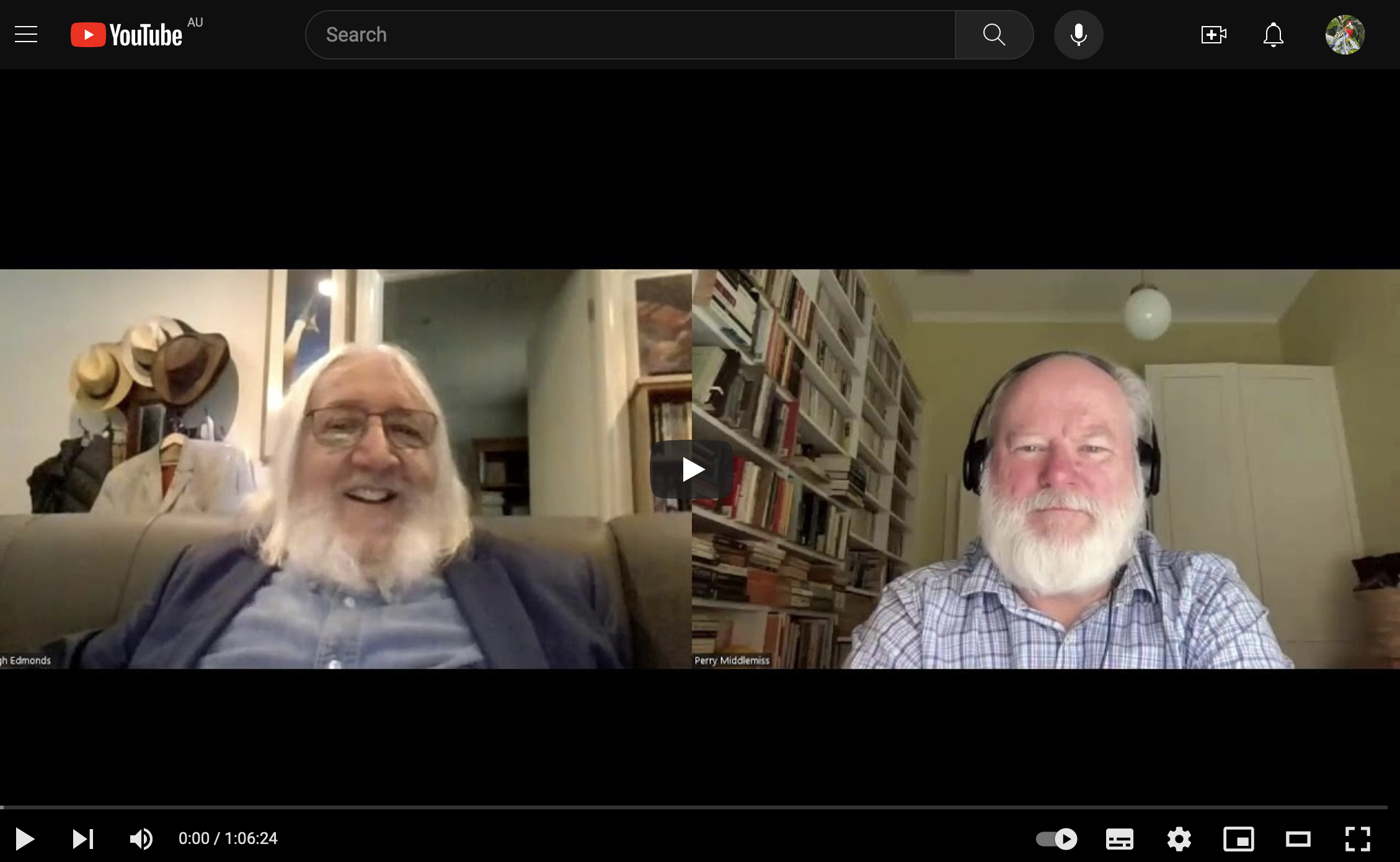
Once again historian Leigh Edmonds and Perry Middlemiss take us to the heart of Australian fan history. This February 2024 zoom session begins with the events of 1960, and the origins of modern Australian fandom in Melbourne. Illustrated with photos and publications, Leigh tells the story of early fannish meetings, of Somerset Place, and of the competing visions of Australian fandom, from sercon to fannish. In this part 2, he covers how Science Fiction Review got started, the seminal influence of John Foyster, John Bangsund and Lee Harding, and the reason the Ditmar Awards are so named. (He also tells you what they are not named.) There’s the first APA in Australia, why it was started and what it became, the importance of comics fans in Australian fan history and Gelaticon. And Leigh conveys the reason why fans were so intent on getting together – “In this group, when you happen to say something about science fiction, people don’t look at you like you’re crazy.”
The zoom session is great fun and well worth watching. Leigh Edmonds is an Australian historian, and a very long-term science fiction fan. His history of science fiction fandom in Australia, “Proud and Lonely; a history of science fiction fandom in Australia 1936-1975 part 1”, will be published in 2024 by Norstrilia Press. Perry Middlemiss is a fanwriter, editor and podcaster as well as a former Worldcon chair. Many thanks also to Robin Johnson for providing tech support for Leigh. (Part 1 is here)
The finalists for the Los Angeles Times Book Prizes were announced—the rare prize that includes a science fiction, fantasy, and speculative fiction category. The SFF finalists are:
Tananarive Due, The Reformatory: A Novel
Daniel Kraus, Whalefall
Victor LaValle, Lone Women: A Novel
V. E. Schwab, The Fragile Threads of Power
E. Lily Yu, Jewel Box: Stories
This year’s judges are Maurice Broaddus (author of Sweep of Stars), Craig Laurance Gidney (author of Sea, Swallow Me & Other Stories), and Lucy A. Snyder (author of Sister, Maiden, Monster).
curation: The process of selecting, organising, and looking after the items in a collection. Formerly the domain of art galleries, the concept of “curating a collection” is now overused, and often in contexts bordering on the ridiculous (head online for pics of “curated salads’, “curated dog experiences” etc, etc). But it is still a hugely important practice to help navigate a meaningful path through the ever-increasing amount of stuff — both high quality and rotten — out there.
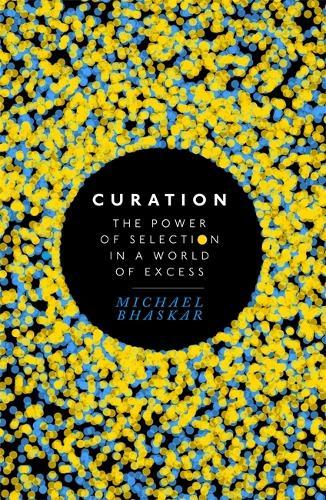
This presentation will specifically reference the book “Curation: The Power of Selection in a World of Excess” by Michael Bhaskar
Kate Treloar will do an introductory overview (15mins) then throw it open to discussion. We will look at issues facing those looking to make meaningful selections (in general and with specific reference to SF) and how this has changed over time.
Those attending might wish to consider:
– how you choose what to read/watch/download/listen to
– how this compares to decades past
– whose recommendations you trust
– is more choice a good thing?
– the role of AI in making choices in the future
Critical Mass at kappy’s tea & coffee merchant, 1/22 Compton St, Adelaide.
Wednesday Feb 28th, 6:30pm Adelaide, 7pm Melbourne/Sydney
The Tor.com site has now become Reactor (www.reactormag.com) on January 23, 2024, — with the launch of a completely redesigned website.
Since its founding in 2008, Tor.com has become a leader in coverage of science fiction and fantasy books and popular culture, with over 3 million visits per month. As an online magazine, Tor.com has won countless awards and has been the Locus Award winner for Best Magazine for 7 years running. In addition to its coverage of all things SFF, the site is also home to an award-winning short fiction program, which has published works by Seanan McGuire, E. Lily Yu, N.K. Jemisin, and scores of first-time authors, and which have gone on to win several Hugo Awards, Nebula Awards, and World Fantasy Awards.
Devi Pillai, President and Publisher of Tor Publishing Group, remarked, “I am very excited to introduce Reactor to the world! We have always been the place to come to for science fiction and fantasy—but with a new name, a new design, we are going to have a magazine that will be more of a pop culture hub for people who love genre of all types. We want to expand the audience and the community that Tor.com has built over the past 15 years.”




 The Adelaide Fan Review
You must be logged in to post a comment.