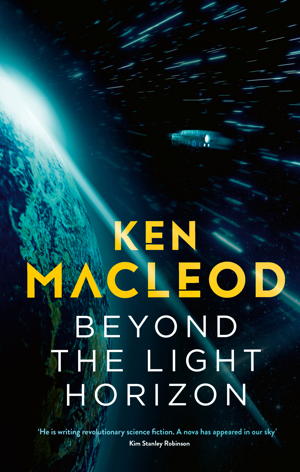
With the third volume of his Lightspeed trilogy due to be released this month, here’s what Ken Macleod had to say about the trilogy:
“Various ideas went into the Lightspeed series: one of them was what I called ‘socialism with European characteristics,’ a play off, obviously, Chinese socialism, and how that might tie into anticipatory algorithms. I was at the point of frantically trying to think of ideas for my next book to pitch to my agent and editor, and I looked through some old notebooks that I had written when I was a student – probably when I was in my teens and early twenties – and this was the idea: a very near future with faster-than-light travel, which is: ‘What if FTL was discovered last year? What if FTL travel was discovered, like, now? Or in 2018, along with Trump, Putin, all the rest of it?’ “I had all these ideas from my past notes about near-future FTL and near-future politics, so I threw them into the mix, and the way the AI thing came into it was that, eventually, you end up with three superpowers: the Union, the Coordinated States, and the Alliance. Each of them has its own AI descendant of Alexa, essentially. The Union is, roughly, the present European Union plus Scotland, and minus England. Both Scotland and Ireland are in it, but England isn’t. England is in the Alliance, which is the Anglosphere, including India. The Coordinated States are something like a development of present-day China, with Russia sort of tagged on. The Union is this very self-righteous, supposedly democratic socialist society that has emerged at what is called the Rising, two decades in the past; I guess it’s the 2030s in the timeline. They’re attempting a very slow transformation away from capitalism, in a gradual transition which they call the Cold Revolution. They have their own friendly AI, called Iskander. The Coordinated States have WeThink, and the Alliance have Smart-Alec. These AI sort of follow in the background. I don’t think the books necessarily take the serious conversation of artificial intelligence very far forward. from Ken MacLeod: So Many Shocks, Locus magazine
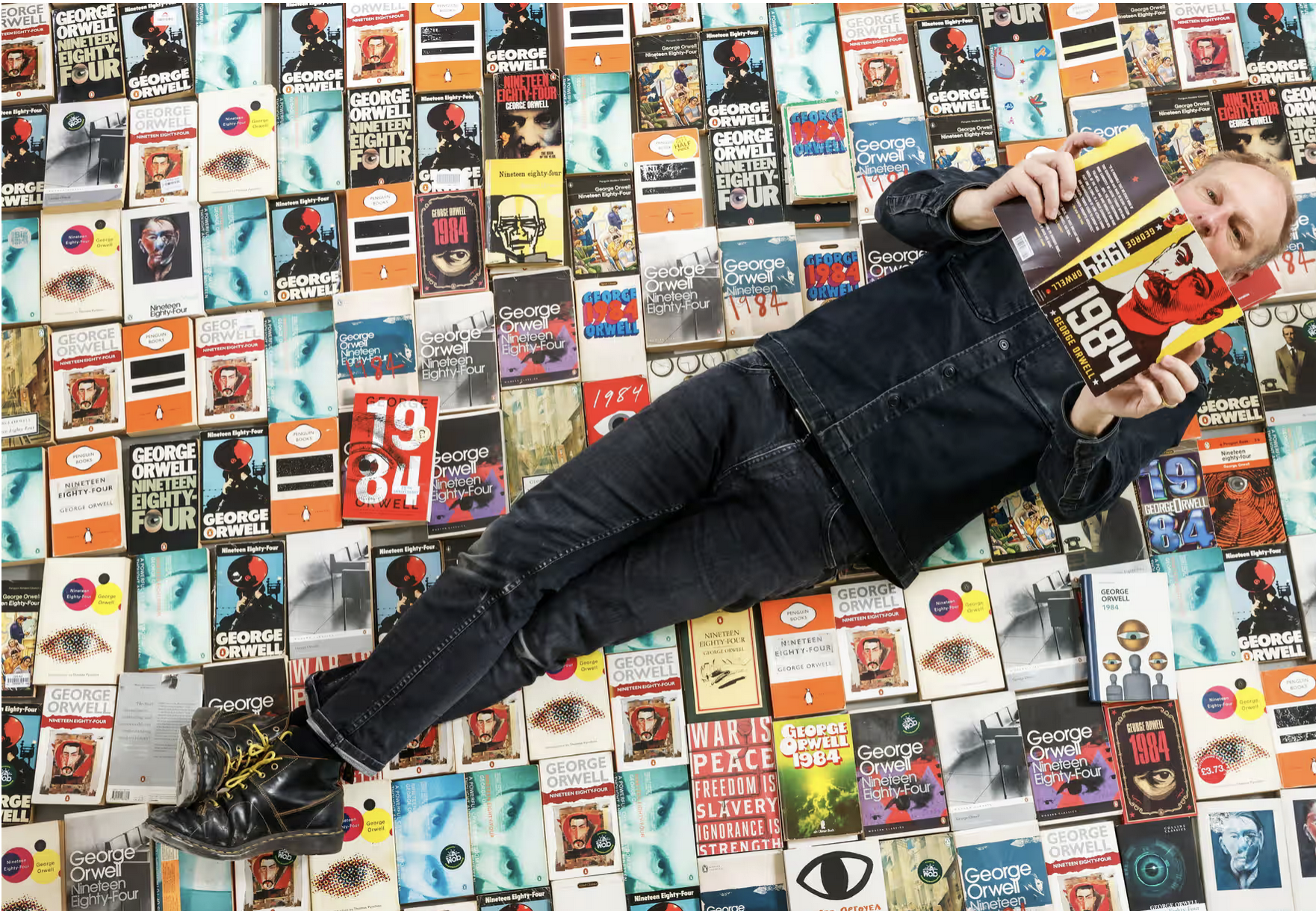
Copies of George Orwell’s dystopian masterpiece Nineteen Eighty-Four have been arriving at an artist’s studio in Edinburgh for months. Every shape and size, posted from Ukraine, Hong Kong, Peru, Germany, Cape Cod and Sarajevo. Some are in mint condition, others are dog-eared, tea-stained, heavily annotated or turned into graffitied art works. One is a water-stained first edition; one is a secret love letter from a married woman to her first love; another, a graphic novel version, came from Orwell’s son Richard Blair. Each has been donated to a unique installation in the community hall of Jura, the Hebridean island where Orwell, in dire poverty and desperately ill, wrote Nineteen Eighty-Four during the late 1940s, to mark its publication 75 years ago. Hans K Clausen, a sculptor based in Edinburgh, is collecting 1,984 copies of the book to exhibit on Jura for three days in early June. It will be an interactive, “living” sculpture where visitors are invited to open and read every volume. Many have arrived, often with overseas postmarks and customs stamps, addressed to “Winston Smith, care of Hans K Clausen”. full story here
May’s Nova Mob is just days away, Wednesday 1 May, which entails cries of May Day and shouts of pure joy as David Grigg and Perry Middlemiss resolve that knottiest of questions, which novel is the best science fiction novel of the 1960’s?
Apparently a shortlist or two has been shortlisted (ahem) with the evening’s discussion to involve deeper, more rigorous scrutiny. Forensics, post-mortems, that sort of thing. Says David: “My cunning plan is that Perry and I will take turns in picking a novel for our “draft” of the 10 best SF novels of the 1960s.”
Audience participation is encouraged; indeed it may well be requested by our two lead debaters. Mob members whose preferred style of engagement is to observe should feel free to continue to do so, of course.
Nova Mob 1 May 2024
Perry Middlemiss and David Grigg argue or agree.
Please share this invitation to this forthcoming meeting with like-minded friends and fans
Face to face
You are invited to an in-person Nova Mob meeting at: Wednesday 1 May 2024 8.00pm – 9.15pm or so (Melbourne), first floor Conference Room. Kensington Town Hall 30 – 34 Bellair St, Kensington Melbourne VIC 3031
By Zoom – simulcast
For those who prefer not to travel or are unable to attend face-to-face. Zoom session broadcast from the Kensington Town Hall. Questions or comments typed into the Zoom chat will be discussed as the opportunity permits, and you’ll have as much airtime as the other Mob members at the venue. Wednesday 1 May 2024 8.00pm – 9.30 pm Canberra, Melbourne, Sydney time; 7.30pm – 9.00pm Adelaide time Join Zoom Meeting https://us02web.zoom.us/j/4177583193?pwd=VjdPL1BhSTBNclN2YnRsejN3Y1hlUT09
Passcode: nova Meeting ID: 417 758 3193
Pre-Mob dining – at the Doutta Galla Hotel The usual pre-Mob location in Newmarket Doutta Galla Hotel, 339 Racecourse Road, Melbourne, Victoria 3031, Australia Table for 8 booked under the name of the Nova Mob Book Discussion group also Murray, 6.00pm for 6.30, through to 8.00pm. https://douttagallahotel.com
💥 💥 💥
Nova Mob email change of address
Please change your address book because of autocomplete.
Please update your address book so your autocomplete doesn’t send you to the old address in error. That address, now out of date, had been scraped by nefarious types and added to some spam lists. The last straw was some phishing attempts, and last month’s email bouncing because the good guys now block those spam lists.
💥 💥 💥
The Cupboard under the Stairs
Sighted at Dymocks, new edition of George Turner’s award-winner
George Turner’s Miles Franklin Award-winning novel “The Cupboard Under the Stairs” has been sighted at Dymocks in a new edition and (how does this happen?) remaindered at the nifty price of $10.00. (Reported by Rob Gerrand).
As mentioned at his Nova Mob talk, John Clute’s investigation into the cultural legacy of dustwrappers has entered print. At Norstrilia Press!
“The first known dust-jacket to appear on a book in the UK dates from 1819.
Sadly, almost none of these jackets have survived. The one institution primarily responsible for this vandalism is the British Library, which removed dust-jackets from every book it accessioned, and destroyed almost all of them.
In The Book Blinders, distinguished critic, editor and novelist John Clute looks at 115 books whose jackets have survived out here in the real world. They escaped the burning. Each has a story to tell.”
Does anyone want to represent or publicise the Nova Mob at Continuum? And congrats to Vanessa Len!
Continuum 16: Reboot – and 62nd NatCon
After a germ-induced hiatus, we are delighted to announce that Continuum is returning to Melbourne, bigger and brighter than ever.
Continuum 16: Reboot will be held 17-19 May, 2024 at Hotel Jasper, 489 Elizabeth Street, Melbourne.”
Guests are Shannon Chakraborty, Nova Mob guest Vanessa Len, and Cienan Muir. Congratulations Vanessa!
Vanessa Len
“Vanessa Len is an internationally bestselling Australian author and educational editor. Her first novel, Only a Monster, won the 2022 Aurealis Award for Best Young Adult Novel, and has been translated into nine languages. The sequel, Never a Hero, is out now.”
Last month we farewelled several noteworthy authors and friends in an illuminating and at times joyously celebratory send-off. Without turning this newsletter into Ansible, wherein Dave Langford has lamented the size of the list of departeds, we must note two recent losses. John Barth’s works at one time took centre stage at the Nova Mob, and Wikipedia’s entry on The Sot Weed Factor provides a plot synopsis of that picaresque novel which is almost as enervating as the novel itself. Trina Robbins shifted the American comix culture to something more welcoming and less misogynist.
John Simmons Barth May 27, 1930 – April 2, 2024) was an American writer best known for his postmodern and metafictional fiction. His most highly regarded and influential works were published in the 1960s, and include The Sot-Weed Factor, a whimsical retelling of Maryland’s colonial history; Giles Goat-Boy, a satirical fantasy in which a university is a microcosm of the Cold War world; and Lost in the Funhouse, a self-referential and experimental collection of short stories. He was co-recipient of the National Book Award in 1973 for his episodic novel Chimera.
Trina Robbins (néePerlson; August 17, 1938 – April 10, 2024) was an American cartoonist. She was an early participant in the underground comix movement, and one of the first women in the movement. She co-produced the 1970 underground comic It Ain’t Me, Babe, which was the first comic book entirely created by women. She co-founded the Wimmen’s Comix collective, wrote for Wonder Woman, and produced adaptations of Dope and [Tanith Lee’s] The Silver Metal Lover. She was inducted into the Will Eisner Hall of Fame in 2013 and received Eisner Awards in 2017 and 2021.
Robbins was an active member of science fiction fandom in the 1950s and 1960s and attended sf conventions. Her illustrations appeared in science fiction fanzines like the Hugo–nominatedHabakkuk. In New York in 1966 she lived in Manhattan’s East Village, where she worked as a stylist and ran a clothing boutique called “Broccoli”. Robbins’ first comics were printed in the East Village Other in 1966. In the late 1960s, she designed clothes for Mama Cass,Donovan, David Crosby, among others. She was intimately involved in the 1960s rock scene, where she was close friends with Jim Morrison and members of The Byrds. Robbins was the first of the three “Ladies of the Canyon” in Joni Mitchell‘s classic song from the album of the same name.
Robbins spoke out against the misogyny and “boy’s club” of comics creators, criticizing underground comix artist Robert Crumb for the perceived misogyny of many of his comics. As a scholar and historian, Robbins researched the history of women in cartooning. She wrote several nonfiction books including Women and the Comics (1985), A Century of Women Cartoonists (1993), The Great Women Superheroes (1996), From Girls to Grrrlz (1999), Pretty In Ink (2013), and Flapper Queens: Women Cartoonists of the Jazz Age (2020).
Roundtable with Ted Chiang, Kelly Link, and Usman T. Malik
Locus recently hosted a virtual roundable discussion with leading SF/F writers Ted Chiang, Kelly Link, and Usman T. Malik, who sat down for a wide-ranging and lively conversation about the art, craft, and business of short fiction, and the impact of the form on their creative work and lives.
Jumpnauts by Hao Jingfang, translated by Ken Liu (Head of Zeus, £20)In 2016 Hao became the first Chinese woman to win a Hugo. Her second novel is set in 2080, when three young scientists conclude that changing emission patterns of pulsars indicate an alien vessel is on its way towards Earth, and that it has been here before. The world is split between two warmongering rivals, the Pacific League and the Atlantic Alliance. If either makes first contact while bristling with weapons, it could be a disaster; so the well-connected friends borrow a private ship to go into space themselves.
More reviews of recent SF by Lisa Tuttle in The Guardian
Last year, Denis Villeneuve said he only wanted to do one more Dune movie, making Dune Messiah to close out a trilogy. A wise man, he told Empire, “After that, the books become more… esoteric.”
A third Dune movie wasn’t official until now, in the wake of Dune 2 doing exceedingly well at the box office.
The 2024 GUFF race is now on, with candidates Kat Clay and Ian Nichols (both from Australia) contending for the GUFF trip to the Glasgow Worldcon on 8-12 August 2024. Here are links to the PDF ballot with candidates’ platforms, and to the online voting form. Australia.
Voting closes on 22 April, 23:59 British Summer Time/8:59 23 April Australian Eastern Standard Time; see ballot for other time zones.
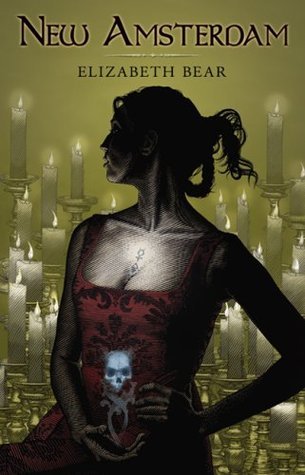
Roman will talk about two series by Elizabeth bear: one historical fantasy, the other space opera.
Abigail Irene Garrett drinks too much. She makes scandalous liaisons with inappropriate men, and if in her youth she was a famous beauty, now she is both formidable–and notorious. She is a forensic sorceress, and a dedicated officer of a Crown that does not deserve her loyalty. She has nothing, but obligations.
Sebastien de Ulloa is the oldest creature she has ever known. He was no longer young at the Christian millennium, and that was nine hundred years ago. He has forgotten his birth-name, his birth-place, and even the year in which he was born, if he ever knew it. But he still remembers the woman who made him immortal. He has everything, but a reason to live.
In a world where the sun never set on the British Empire, where Holland finally ceded New Amsterdam to the English only during the Napoleonic wars, and where the expansion of the American colonies was halted by the war magic of the Iroquois, they are exiles in the new world–and its only hope for justice.
This is a more recent work, the first of two novels. A routine salvage mission in space uncovers evidence of a terrible crime and relics of powerful ancient technology. Haimey and her small crew run afoul of pirates at the outer limits of the Milky Way, and find themselves on the run and in possession of universe-changing information.
When authorities prove corrupt, Haimey realizes that she is the only one who can protect her galaxy-spanning civilization from the implications of this ancient technology—and the revolutionaries who want to use it for terror and war.
Meeting details:
April Critical Mass Time: Apr 24, 2024 6:30pm Adelaide, 7pm Melbourne/Sydney/Brisbane, 5pm Perth, 10am London, noon Petersberg
Live at Kappys, 1/22 Compton St, Adelaide Please arrive at 6:15 to order drinks for a 6:30 start
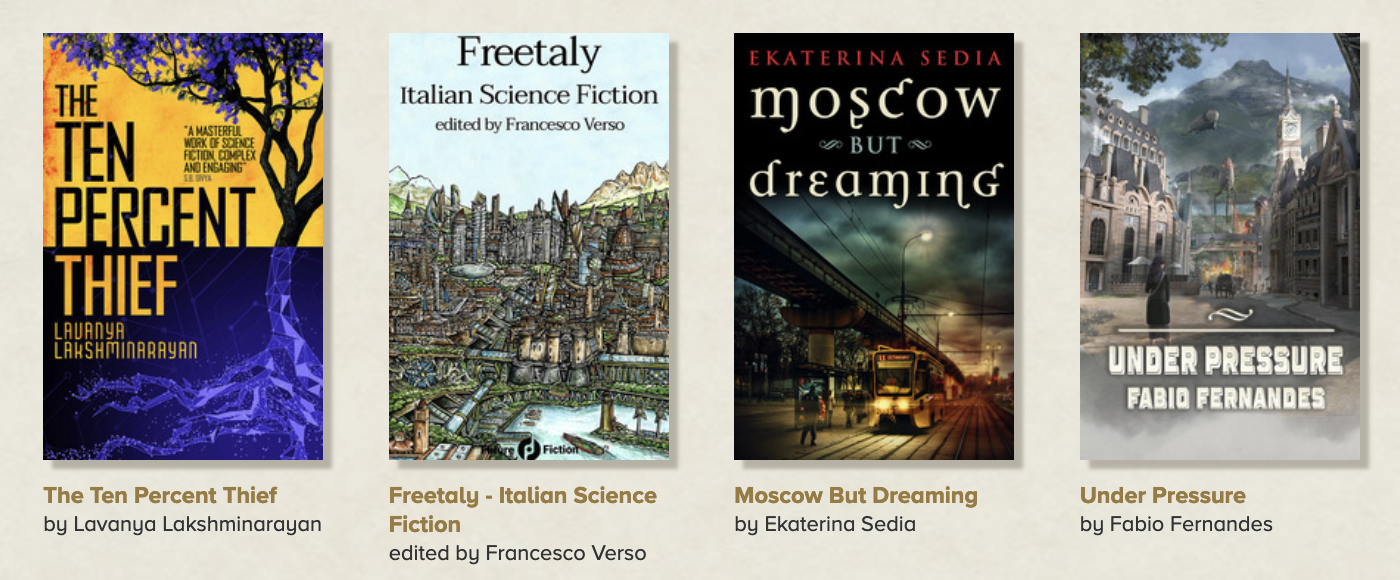
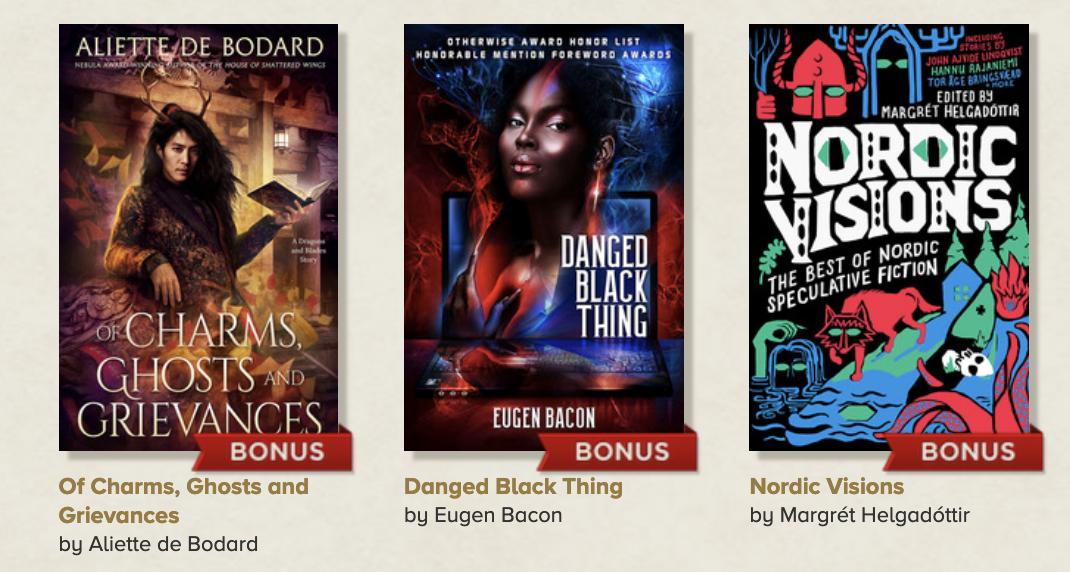
Lavie Tidhar writes about a new storybundle It’s hard to believe this is the seventh – seventh! – World SF bundle I’ve had the privilege to put together. It’s been a trip, collecting novels and stories from around the world, both here with StoryBundle and with the early Apex Book of World SF anthologies and the more recent Best of World SF hardbacks from Head of Zeus. It’s a constant joy to see how much more international the science fiction and fantasy fields become year after year, more accessible, more diverse and more interesting.
I hope you enjoy this year’s crop, and find something you like in the selection. Remember that the bundles not only support the authors and their publishers directly, but also our partner charity. At a time when the world seems ever more strained and polarised, literature joins us together, and speculative fiction offers us that rarest of things, hope. So dive in, and I hope you enjoy these stories!
To find out more about the ten books in this bundle, click here
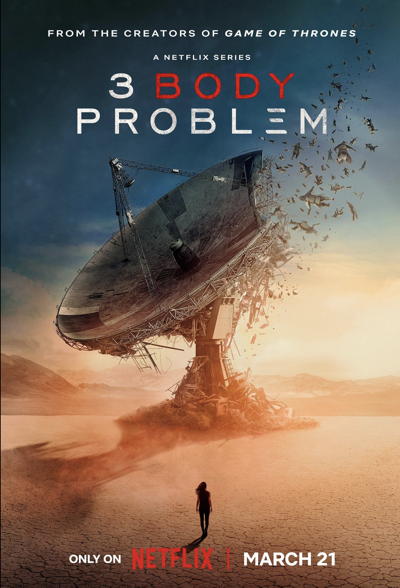
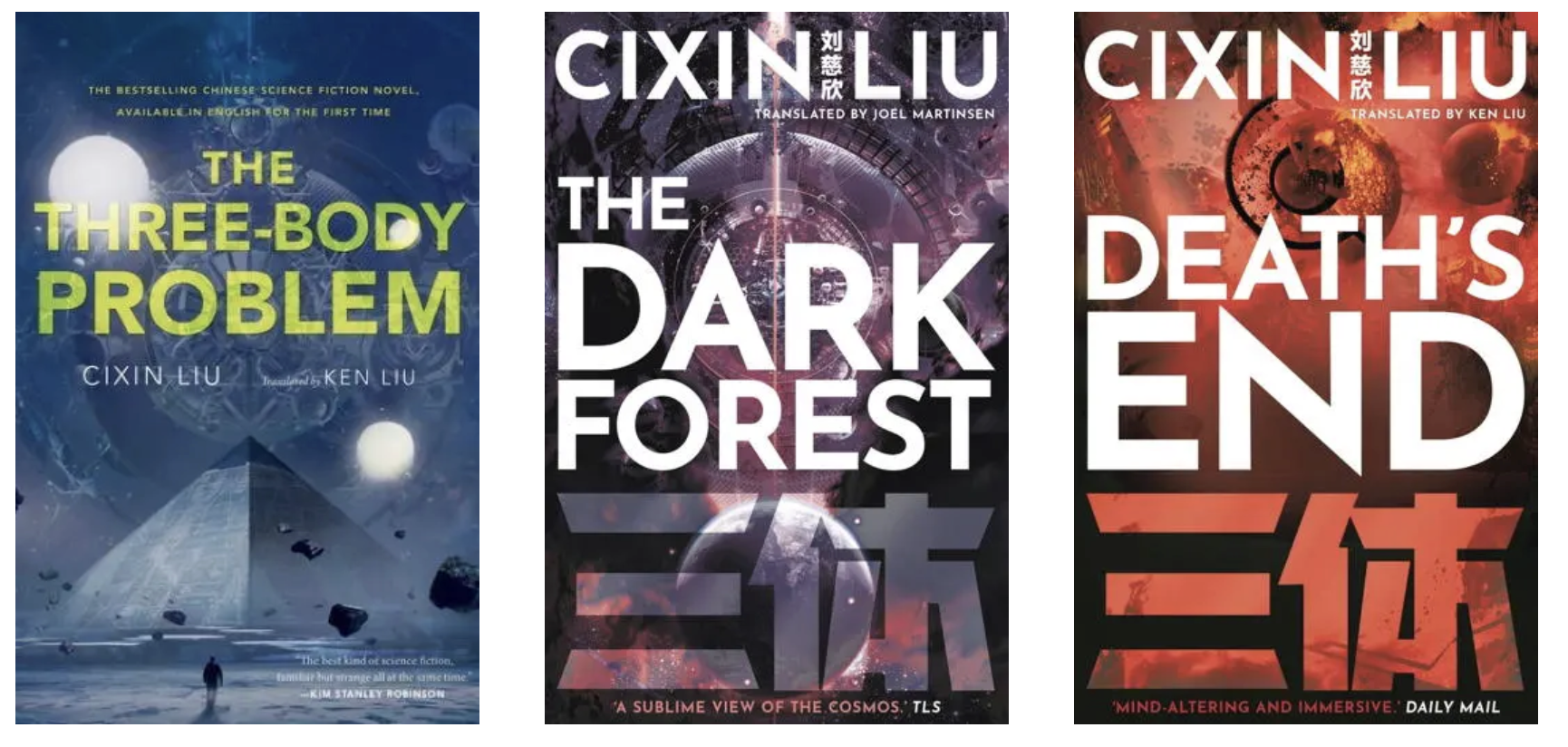
They’ve made a new series based on the Liu Cixin novel.
“Ye Wenjie is an astrophysicist who sees her father beaten to death during a struggle session in the Chinese Cultural Revolution. She is conscripted by the military because of her scientific background and is sent to a secret radar base in a remote region. Her fateful decision at the base echoes across space and time to a group of scientists in the present day, forcing them to face humanity’s greatest threat.”
The english TV series is interesting and engaging, with some grim scenes from the cultural revolution, to the curious events in our present day when the stars blink at us. Several scientists have been killed (or suicided) after a series of quantum experiments started returning nonsensical results, globally. The first two episodes had me hooked!
The english translations of the trilogy (Ken Liu/Joel Martinsen)







 The Adelaide Fan Review
You must be logged in to post a comment.