
Having convinced a “Klavern” in Atlanta, Georgia that he shared their bigoted views, Kennedy donned the ominous attire of a Klansman, attended cross burnings, and covertly collected information about the group that he would then share with law enforcement and media. Radio journalist Drew Pearson would read the names and minutes of their meetings on air, exposing their guarded dialogues.
Revealing their closed-door sessions was a blow—one that Kennedy didn’t necessarily have to confine to nonfiction. In 1946, Maxwell, who produced the Superman radio serial broadcast around the country, embraced Kennedy’s idea to contribute to a narrative that had Superman scolding the racial divisiveness of the Klan and airing their dirty laundry to an enraptured audience.
In “Clan of the Fiery Cross,” a 16-part serial airing in June and July of 1946, Superman opposes an organized group of hatemongers who target one of Jimmy Olsen’s friends. Exploring their network, Clark Kent uncovers their secret meetings and policies before his alter ego socks the “Grand Scorpion” in the jaw. The idea, Kennedy wrote in his account of his work, “The Klan Unmasked“, was to made a mockery of their overblown vernacular.
— excerpt from How Superman Helped Foil the KKK at Mental Floss
Category: Critical Mass
Aldiss dies in his sleep at 92
[Brain Aldiss] began publishing his stories in the mid-1950s, a time when SF was heavily dominated by US writers schooled in the markets of commercial magazines. Aldiss’s work came as a breath of fresh air to a genre beginning to suffocate in its own orthodoxies. He wrote lively, intelligent prose, shot through with subversive humour, linguistic novelty and human observation. He took for his subjects the full range of modern scientific research. As well as the exact sciences, he also plundered speculative, psychological, sociological and sexological areas of inquiry. One of the most exhilarating aspects of reading Aldiss is the diversity of his imagination.
— from Chris Priest’s Obituary for Brian Aldiss in the Guardian
There’s a more personal reflection on Chris Priest’s blog
Confessions of an SF addict
For the next month or so (for that matter, for the next four years, off and on), I spent some part of every weekend at the Hardings’. I don’t remember much about conversations, except that they were largely about music. Lee assured me that every time he tried to talk about sf I’d talk about Thomas Hardy or Thomas Love Peacock. Sometimes we got onto philosophy, and this proved my undoing. One night he gave me a paperback and said, ‘There: you’re pretty hot on theology (I had, in fact, spent a couple of years in theological college) – read that story and tell me what you think of it.’
So I took the book out onto the verandah, and read Arthur C Clarke’s THE STAR. And the foundations of my antipathy to sf began to crumble. Here was as fine a dramatic presentation of a theological difficulty as I had ever come across, as a story, and as stimulus to thought, it was first-rate.
— A WAY OF LIFE The Confessions of an SF Addict, John Bangsund,
from Apastron 1, published for the 1968 Easter SF Conference.
Full article reprinted in Leigh Edmond’s iOTA 9, a work in progress on a history of SF fandom in Australia pre 1975. Worth a read, as the issue also includes a convention review by John Foyster, Lee Harding’s notes on Ursula K LeGuin’s visit to Sydney and Denis Stock’s piece about Arthur C Clarke’s visit to Brisbane.
Arthur C Clarke Award 2017
The Arthur C. Clarke Award for science fiction literature has announced its 2017 winner.
The Underground Railroad, Colson Whitehead (Fleet)
The winner received a prize of £2017.00 and the award itself, a commemorative engraved bookend.
The complete shortlist was:
A Closed and Common Orbit, Becky Chambers (Hodder & Stoughton)
Ninefox Gambit, Yoon Ha Lee (Solaris)
After Atlas, Emma Newman (Roc)
Occupy Me, Tricia Sullivan (Gollancz)
Central Station, Lavie Tidhar (PS Publishing)
The Underground Railroad, Colson Whitehead (Fleet)
The Orville: new SF show from Fox
THE ORVILLE is a one-hour science fiction series set 400 years in the future that follows the adventures of the U.S.S. Orville, a mid-level exploratory vessel. Its crew, both human and alien, faces the wonders and dangers of outer space, while also dealing with the familiar, often humorous problems of regular people in a workplace…even though some of those people are from other planets, and the workplace is a faster-than-light spaceship. In the 25th century, Earth is part of the Planetary Union, a far-reaching, advanced and mostly peaceful civilization with a fleet of 3,000 ships.
Fox showed this version of their trailer for The Orville at Comic-Con:
While we’re at it, here’s the trailer for the new Star Trek series, Discovery, on NetFlix
Tina Guo: Wonder Woman
An extraordinary performance of the main theme from Wonder Woman!
Onward and Upward
“I just didn’t know what to do with my stuff until I stumbled into science fiction and fantasy,” Le Guin says. “And then, of course, they knew what to do with it.” “They” were the editors, fans, and fellow-authors who gave her an audience for her work. If science fiction was down-market, it was at least a market. More than that, genre supplied a ready-made set of tools, including spaceships, planets, and aliens, plus a realm—the future—that set no limits on the imagination. She found that science fiction suited what she called, in a letter to her mother, her “peculiar” talent, and she felt a lightheartedness in her writing that had to do with letting go of ambitions and constraints. In the fall of 1966, when she was thirty-seven, Le Guin began “A Wizard of Earthsea.” In the next few years—which also saw her march against the Vietnam War and dance in a conga line with Allen Ginsberg, when he came to Portland to read Vedas for peace—she produced her great early work, including, in quick succession, “The Left Hand of Darkness,” “The Lathe of Heaven,” “The Farthest Shore,” and “The Dispossessed,” her ambitious novel of anarchist utopia.
— The Fantastic Ursula K leGuin, Julie Philips, New Yorker Oct 17, 2016
Electronic fanzine reprints
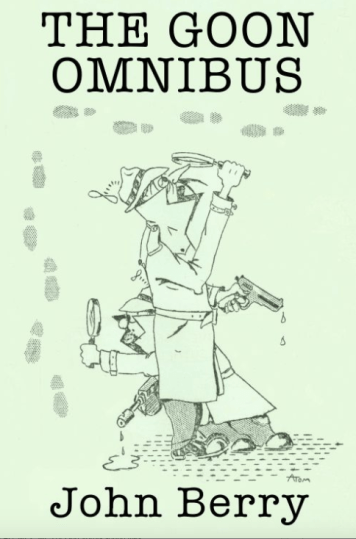
Dave Langford has been assembling ebooks from fannish writings, including TAFF trip reports, columns from Walt Willis and John Berry, back issues of Ansible and elsewhere.
All free, though a donation to the Trans-Atlantic Fan Fund (TAFF) is suggested.
These ebooks include some of the funniest pieces written in a long time. I particularly enjoyed the Walt Willis Fanorama columns from Nebula in the 50s.
ebooks at http://taff.org.uk/ebooks.php
2017 Locus Awards
The winners of the 2017 Locus Awards were announced at Locus Awards Weekend in Seattle on June 24.
- SCIENCE FICTION NOVEL: Death’s End, Cixin Liu (Tor; Head of Zeus)
- FANTASY NOVEL: All the Birds in the Sky, Charlie Jane Anders (Tor; Titan)
- HORROR NOVEL: The Fireman, Joe Hill (Morrow)
- YOUNG ADULT BOOK: Revenger, Alastair Reynolds (Gollancz; Orbit US ’17)
- FIRST NOVEL: Ninefox Gambit, Yoon Ha Lee (Solaris US; Solaris UK)
- NOVELLA: Every Heart a Doorway, Seanan McGuire (Tor.com Publishing)
- NOVELETTE: “You’ll Surely Drown Here If You Stay”, Alyssa Wong (Uncanny 5-6/16)
- SHORT STORY: “Seasons of Glass and Iron“, Amal el-Mohtar (The Starlit Wood)
- ANTHOLOGY: The Big Book of Science Fiction, Ann & Jeff VanderMeer, eds. (Vintage)
- COLLECTION: The Paper Menagerie and Other Stories, Ken Liu (Saga; Head of Zeus)
- EDITOR: Ellen Datlow
- ARTIST: Julie Dillon
- NON-FICTION: The Geek Feminist Revolution, Kameron Hurley (Tor)
- ART BOOK: Charles Vess, Walking Through the Landscape of Faerie (Faerie Magazine)
Full list of all awards, winners and nominees, on the Locus Online site.
The Locus Awards are chosen by a survey of readers in an open online poll that runs from February 1 to April 15.
“Real” Zombies
“It turns out the idea of living dead—depending how you define both “living” and “dead”—may not be as far-fetched as it might seem. Some science fiction writers have found inspiration—and trepidation—in real-life parasites. We talked to two of them, Mira Grant and M.R. Carey, about their newest books and the concept of scientific zombies.
…Carey searched for a pathogen that met his criteria for the cause of the hungry epidemic, and realized that Cordyceps fit perfectly. It was also a unique choice. “At the time nobody had ever used a fungus as the vector for a zombie plague,” he says, though the creators of a console game called The Last of Us came up with the same idea independently, around the same time.
… Besides reading, Grant also “spent a lot of time on the phone with the CDC, which was an incredible amount of fun.” Grant savored the information she gleaned that way, but her friends “had to make new rules about what I was allowed to discuss over food,” so they didn’t lose their appetites.”
— excerpts from Omnivorcious interview of “Mira Grant” and M.R. Carey in “The Scientific Case for Zombies”. thanks to File 770’s Pixel Scroll
 The Adelaide Fan Review
You must be logged in to post a comment.