
It took 26 publisher rejections before Madeleine L’Engle could get “A Wrinkle in Time” into print in 1962. The book was an instant hit, winning the Newbery Medal the following year, but despite its wild success, L’Engle still had fierce critics — including a good number of them who disliked her book for faith reasons.
While L’Engle considered herself a devout Christian, and sprinkled the book with scriptural references, she was accused by some conservative Christians of promoting witchcraft and the occult — an accusation made later against “Harry Potter” author J.K. Rowling.
— “Publishers rejected her, Christians attacked her: The deep faith of ‘A Wrinkle in Time’ author Madeleine L’Engle” by Sarah Pulliam Bailey, Washington Post
Category: Critical Mass News
News items which go out to a monthly newsletter
The Tiptrees
Virginia Bergin has won the 2017 Tiptree Award for her novel Who Runs the World? (Macmillan, UK, 2017). (The novel will be published in the US in November 2018 under the title The XY (Sourcebooks, 2018).
Who Runs the World? is a young adult novel that tells an intricately layered tale of intergenerational struggle and cooperation, the dehumanizing force of gender stereotypes, and the moral courage it takes to challenge cultural and political norms. Bergin invokes a premise familiar in feminist science fiction—a plague that kills nearly everyone with a Y chromosome. Without relying on biological determinism, Bergin uses this premise to develop a vividly imagined feminist society, and to grapple with that society’s changes and flaws over time.
The Honour List

In addition to selecting the winners, the jury chooses a Tiptree Award Honor List. The Honor List is a strong part of the award’s identity and is used by many readers as a recommended reading list. These notes on each work are excerpted and edited from comments by members of this year’s jury. This year’s Honor List is:
Charlie Jane Anders, “Don’t Press Charges and I Won’t Sue” (Boston Review, USA, 2017)
This graphic and visceral dystopia shows trans people stripped of their legal rights, abducted, and operated on in the name of “curing” their gender identities. Harrowingly portrayed through the viewpoints of both victim and perpetrator, the story describes a medicalized torture resonant with real-world histories of violent “treatment” for gender deviance that was routine only a few decades ago.
Indra Das, The Devourers (Del Rey, USA, 2016)
A fascinating, memorable novel that uses a nested narrative to thread its story through Indian history, from the 17th-century Mughal Empire to contemporary Kolkata. The structure uses multiple points of view to mirror the perspective of the book’s magical characters: a species of predatory shape-shifters who gain access to the memories of the people they consume. Inspired by mythological beings that include werewolves, djinn, and rakshasa.
April Daniels, Dreadnought and Sovereign (Diversion, USA, 2017)
The first two books of a trilogy, these novels follow Danny, a transgender teenage girl stuck living as a boy. A chance meeting with a dying superhero allows Danny to have her deepest desire granted, with the side effect that she’s now the most powerful superhero on the planet.
Maggie Shen King, An Excess Male (Harper Voyager, USA, 2017)
A novel of exquisitely deep, nuanced characterization, set in a future China where there are forty million more men than women. This book explores polyandrous marriage, non-neurotypical cognition, state-sanctioned homophobia, and the dynamics of bonding in male-only spaces..
Carmen Maria Machado, Her Body and Other Parties (Gray Wolf, USA, 2017)
A collection of short stories that explore the cultural treatment of women’s bodies, written with stunning artistry. Machado offers a multifaceted view of the insides and undersides of queer kinds of femininity that we mostly never see, brought into the light in all their darkness and brightness, sweetness and ugliness.
Rivers Solomon, An Unkindness of Ghosts (Akashic, USA, 2017)
A powerful novel of individual and collective survival in the face of generational trauma. On a generation ship, the Black inhabitants of the lower decks live and work under brutal conditions that recall slavery in antebellum America. The story follows lowerdecker Aster as she struggles to survive and make sense of her world.
JY Yang, “Black Tides of Heaven” and “Red Threads of Fortune” (Tor, USA, 2017)
Set in a society where children are without gender until they choose to be confirmed into a specific identity, these paired silkpunk novellas follow aristocratic twins from their identical childhoods through increasingly divergent adulthoods. The first is a bildungsroman of Akeha, the male twin, who must learn himself at a young age because he lacks any defined place within his family or culture. The second is a recovery narrative of Mokoya, the female twin, whose relatively frictionless path through life demands of her little introspection, until a traumatic event upends her sense of self, requiring she build a new understanding of her identity to navigate her grief. Both stories explore the process of struggling past expectation to achieve self-definition.
More details at /tiptree.org/2018/03/virginia-bergin-wins-2017-tiptree-award-honor-list-and-long-list-announced
Crit Mass Mar 7th: Adam on Stereotypes
Adam Jenkins is speaking this wednesday for Critical Mass.
“Using fan fiction to evaluate character preferences”
Stardew Valley is on of the most popular videos games in the fantasy romance/farming simulator category – a particularly small category of games, but strangely one that has considerable popularity. As part of its popularity it has spawned a great deal of fan fiction as people explore the romance options beyond what is outlined in the game. Social media is increasingly being used to evaluate the potential success (or otherwise) of genre fiction, and here is an opportunity to explore whether or not fan fiction can be similarly employed.
7pm Wednesday, March 7th at Kappys at 22 Compton St, near the market.
Doors open at 6:45
Doors open at 6:45
Bill McKibben on SF
Bill McKibben ( founder of 350.org) has long advocated for more people to use the power of art to tackle climate change. He recently appeared on the podcast Geek’s Guide to the Galaxy.
“I wrote a piece maybe 15 years ago arguing that there had been very limited artistic response to climate change, which was odd given the scale and magnitude,” he says. “And I’m very glad to see that changing on every front.”
One group of artists who has tackled climate change is science fiction writers, with authors like Kim Stanley Robinson, Paolo Bacigalupi, and Tobias Buckell comprising the so-called “cli-fi” movement. In particular McKibben praises Kim Stanley Robinson’s recent novel New York 2140, which depicts a future in which rising seas have transformed New York into a city of canals. “For my money the best science fiction—and in many ways the best fiction—of the last year was New York 2140,” he says. “It’s a wonderful and oddly cheerful book, I must say. I really, really enjoyed it.”
McKibbben also praises science fiction writers for addressing the dangers of emerging technologies like genetic engineering, nanotechnology, and AI.
“I’ve thought for the last 20 years that science fiction was really the only realm where people were dealing intelligently with some of these questions,” he says. “They were the only people who were having to perform the thought experiment of putting the potential power of these technologies up against the scale of human beings—of their characters—and just figuring out that human beings quickly got overwhelmed by technology at this scale.”
Listen to the complete interview with Bill McKibben in Episode 293 of Geek’s Guide to the Galaxy.
Crit Mass Feb 7th: Defining Science Fiction
“These difficulties of defining SF are, in part, a function of the sheer number of SF texts that need to be brought beneath the bar of any notional inclusive definition. Where SF once upon a time constituted a small body of texts, nearly all of them novels and short stories, which most fans could be expected to have read, nowadays SF texts are impossibly legion. Scott McCracken points out that ‘Science Fiction is enormously popular. It accounts for one in ten books sold in Britain, and in the United States the number is as high as one in four’ (McCracken 1998: 102). John Clute has pointed out that the number of texts classified as SF has ballooned since the early years of the twentieth century. According to Clute, even at the height of the ‘Golden Age’ the number of separate novels published as science fiction was a few hundred a year. Nowadays, taking together science fiction and fantasy, thousands of novels are published annually. Now ‘what was once a field [has] become the Mississippi Delta’. In Clute’s opinion, if Golden Age SF could be perceived as ‘a family of books which created (and inhabited) a knowable stage (or matrix[…]”
— Adam Roberts. “Science Fiction: Second Edition.”
We’re having a look at Adam Roberts’ critical work, Science Fiction (2nd edn, 2005) at the February critical mass meeting, 7pm at Kappy’s. Roman will take us on a quick tour through key ideas in the work, starting from some well-known definitions, looking at SF and gender, SF and race, different histories of SF and revealing a surprising connection between SF and poetry!
Ursula K Le Guin, by Margaret Atwood
In all her work, Le Guin was always asking the same urgent question: what sort of world do you want to live in? Her own choice would have been gender equal, racially equal, economically fair and self-governing, but that was not on offer. It would also have contained mutually enjoyable sex and good food: there was a better chance of that.
— Margaret Atwood, writing in the guardian
New to LeGuin? Have a look the guardian’s list of her essential novels
We lost Ursula k LeGuin
I asked Ursula what she wanted to see happen to her books after she died. I’ll never forget what she said. I’ll share it with you now, as a reminder of how we are supposed to grieve her, even if we can’t read through the tears:
“I want them to be available, I want cheap paper editions of them, I want them to be continuously downloaded in forty different languages, I want them to be read, I want them to be argued about, I want people to cry over them, I want unreadable dissertations written about them, I want people to get angry with them, I want people to love them.”
— Claire L. Evans, journalist and cofounder of Motherboard’s science fiction imprint, Terraform.
Full article on Motherboard
lao tzu: tao te ching
LeGuin was a Taoist, and released her new translation of Lao Tzu’s tao te ching in the 1990s. Her recording was released in 2009, and can be heard on Youtube:
Ursula K LeGuin lives on in her work
“On every act the balance of the whole depends. The winds and seas, the powers of water and earth and light, all that these do, and all that the beasts and green things do, is well done, and rightly done. All these act within the Equilibrium. From the hurricane and the great whale’s sounding to the fall of a dry leaf and the gnat’s flight, all they do is done within the balance of the whole. But we, in so far as we have power over the world and over one another, we must learn to do what the leaf and the whale and the wind do of their own nature. We must learn to keep the balance. Having intelligence, we must not act in ignorance. Having choice, we must not act without responsibility.”
— The Farthest Shore, Ursula K LeGuin
Ursula K Le Guin died on Tuesday, Jan 23rd. This small, fierce and sharply intelligent poet, writer, critic and philosopher will be missed. I had the great pleasure of seeing her at Aussiecon back in 1975.
Tarkovsky Season
Adelaide’s Cinémathèque has some goodies in store this season, including three awesome Andrei Tarkovsky films in March , and a slew of SF & F films April/May.
 The Sacrifice
Wednesday March 14 | 7:00pm 4K restoration
1986 / 149mins / Sweden/UK/Fra
Winner of the Grand Prix at Cannes, his third as an ex-patriate and his last film, it is known as Tarkovsy’s homage to Ingmar Bergman, seen here in its 2017 beautiful 4K restoration. A middle aged ex actor, despairing and bitter at a changing world, tries to bargain with God when faced with an impending nuclear war. Shot by Ingmar Bergman’s longtime cinematographer Sven Nykvist, The Sacrifice contains some of the most powerful images in Tarkovsky’s monumental oeuvre. Perhaps its most transcendent moment is the penultimate scene, an epic, six-minute-long take that stands as one of the wonders of cinema. A powerful statement of humility in the face of the unknown, The Sacrifice is an exquisite parting word from one of the greatest artists of the 20th century.
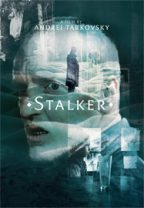 Stalker
Monday March 19 | 7:00pm
1980 / 162mins / Russia
The visual aesthetics, philosophical and psychological approach of this most highly lauded film influenced an entire generation of filmmakers working in the genre of dystopic sci-fi. An expedition is led by Stalker into the Zone to find the room where you can fulfil your innermost desires. It remains a dense, complex, often-contradictory and endlessly pliable allegory about human consciousness, the necessity for faith in an increasingly secular, rational world and the ugly, unpleasant dreams and desires that reside in the hearts of men. Screenplay written by Boris and Arkady Strugatsky, loosely based on their novel Roadside Picnic (1972)
The starkness of its conception did not prevent the production traumas during its creation. Plans to shoot in Tajikistan had to be abandoned because of an earthquake. Having relocated to an abandoned hydroelectric power station in Estonia, Tarkovsky was dissatisfied with the cinematography and decided to shoot a pared-down version of the script all over again – in the same place. The price paid for this pursuit of an ideal is incalculable. Sound recordist Vladimir Sharun believes the deaths from cancer of Tarkovsky (in 1986), his wife Larissa and Anatoly Solonitsyn (who plays the Writer) were all due to contamination from a chemical plant upstream from the set.
* This is the film screening in the cinema in Atomic Blonde — in cyrillic, “Сталкер”
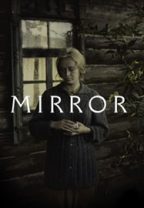 The Mirror
Wednesday March 21 | 7:00pm
1975 / 107mins / Russia
Ranked by Sight and Sound as the 12th greatest film ever made, this highly evocative, non-linear and loosely autobiographical film is said to capture the organic unfolding of memory, in this case the key events in the life of a dying poet.
The events are both highly personal such as a painful divorce as well as historical in regard to the great upheavals of 20th century Russia. The life is represented in such a way as to attempt the erosion or even abolition of the distinction between past and present. Tarkovsky worked on the script for over a decade and the film itself is the result of almost 40 major re-edits. The influence of Fellini and Ingmar Bergman can be seen in this film.
A 4 session pass to Cinémathèque is $40/$30; you’ll probably want to see Hard to Be A God on 23 April or one of the four other sf films in the After Year Zero sessions
 The Adelaide Fan Review
You must be logged in to post a comment.