
Science fiction can deliver a unique impact. It can suggest to us why we yearn for the opportunity to sit down and share a pizza with someone from Arcturus; or why we would love to be present for the first performance of Hamlet, with an opportunity to wait outside at the end and inform Will Shakespeare (who played the ghost that opening night) that the show was seriously good; or why we dream about what it would be like to climb out of an airlock and step down onto the surface of another planet.
It reminds us, in many ways, of who we are.
— Jack McDevitt, writing about “Five Stories That Celebrate the Everyday in Science Fiction” at tor.com
Category: Critical Mass News
News items which go out to a monthly newsletter
How to Suppress Women’s Writing

The best part of this book is how concise and well-exampled each section of the argument is. Scholarly work has a tendency to be unnecessarily long and dense for no virtue other than a page count, but that’s no problem here. Russ cuts through the bullshit to use each word as effectively as it can be used and never lets herself stray from the outline of her analysis—in short, she brings the skills of a fiction writer to her academic work, and the result is an excellent text.
— Brit Mandelo, “How to Suppress Women’s Writing by Joanna Russ” at tor.com
Don’t you just love a caper flick?
A new Jonathan Carroll
“When she got home from Bellport’s office she made a cup of coffee and took it to her desk. Fittingly, she took out the gorgeous, carmine-red, Japanese lacquer fountain pen he had given her for her birthday many years before. The great irony was although she loved pens, notebooks, and everything to do with handwriting, hers was absolutely atrocious and had been all of her life. It was tiny and almost indecipherable to anyone but herself. He once said it looked like someone dipped a pigeon’s feet in ink then let it walk across the page. He was right. It had always embarrassed her, and put side to side with his precise, singular, almost calligraphic script, it was like comparing gravel to a diamond.”
—- from Played Your Eyes, a new Jonathan Carroll short Story at tor.com
Butler in Space!
The IAU is naming features on Charon, Pluto’s moon, and have decided to honour Octavia Butler by naming a mountain after her. Butler Mons joins a host of other names celebrating the spirit of human exploration at the furthest reaches of our solar system.
Crit Mass, April 4th: Digital Humanities Part II
Andrew is presenting Critical Mass, 7pm at Kappys.
With great sadness we mourn the passing of Ursula Le Guin in January of this year. During her literary career she was won numerous awards. Including two Hugos (Left Hand of Darkness and Dispossessed) and four Nebulas (Left Hand of Darkness, Dispossessed, Powers and Tehanu); more Nebula awards than any other author.
There are many aspects of her writing that I appreciate, one of which is her brevity. Her novels are complete, each with a beginning, a middle and an end; offering intrigues, character development, and cathartic conclusions. However in comparison to modern works of fiction I find her novels exceptionally short. I often wonder whether novel length has evolved over time, or was perhaps Le Guin unusually concise?
To address these questions we examine the list Hugo and Nebula winners over the past 65 years, comparing Le Guin’s novels with other winners, and assess how novel length has varied over time.
Hard to be A God premiere
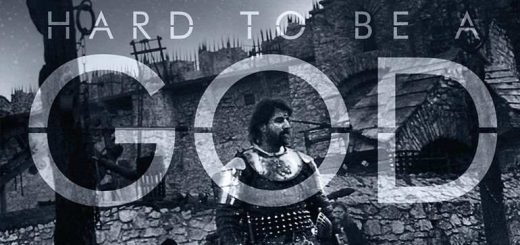
Cinémathèque at the Mercury starts its After Year Zero mini season with Alexsei German’s Hard to be A God, 7pm Mon 23rd April. This will be the first public screening in Adelaide of this extraordinary film, based on the Strugatsky’s novel.
Also in the season are:
- Stanley Kramer’s On the Beach, 7pm Mon 30th April
- Jeunet & Caro’s Delicatessen, 7pm Wed 2nd May
- Bong Hoon’s Snowpiercer, 7pm Mon 7th May
- Terry Gilliam’s Twelve Monkeys, 7pm Wed 9th May
A four film pass to Cinémathèque screenings will cost you $40 / $30 conc.
Annihilation is Amazing, and Full of Women
Liz Bourke writes in her new column over at Tor.com:
Annihilation is luminous. It’s dizzying and visionary and strange, a balletic question with no certain answer, peculiar and horrifying and layered and gorgeous, and lit from within with its own artistic vision: unified, structurally and thematically, in a way that few Hollywood films ever are. It’s a film that speaks with its silences, embraces them. It layers implication, symbolic meaning, from the opening shot of a dividing and re-dividing cell—revealed by Natalie Portman’s Lena in a lecture to her students to be a tumour cell—to its asides about grief and self-destruction, and from the horrifying wonders (and bewildering horrors) of the Shimmer to the fact that the film is subtly framed as Lena’s narrative, and all things considered (“Lena is a liar,” as Anya Thorensen, played with brilliant intensity by Gina Rodriguez, says in a moment fraught with psychological horror), we can’t be entirely sure about our narrator’s reliability.
Missing Gems
John M. Ford’s Growing Up Weightless is one of the two best Heinlein juveniles not written by Heinlein (the other being Alexei Panshin’s Rite of Passage.). A lean, vividly imaged coming-of-age story set on the Moon, it should be a classic of science fiction. It isn’t (or at least, not one that’s easy to track down). Ford died tragically young without having designated a literary executor. The rights to his works reverted to his blood relatives, who seem intent on erasing evidence of Ford’s writing career. While Tor has done a masterful job of keeping their John M. Ford books, The Last Hot Time and Heat of Fusion and Other Stories in print, Growing Up Weightless was published by Bantam and is out of print.
— just one of several books noted by James Davis Nicoll in his piece “Why the Hell Are These Books Out of Print?” published by Tor
L’Engle accused of witchcraft
It took 26 publisher rejections before Madeleine L’Engle could get “A Wrinkle in Time” into print in 1962. The book was an instant hit, winning the Newbery Medal the following year, but despite its wild success, L’Engle still had fierce critics — including a good number of them who disliked her book for faith reasons.
While L’Engle considered herself a devout Christian, and sprinkled the book with scriptural references, she was accused by some conservative Christians of promoting witchcraft and the occult — an accusation made later against “Harry Potter” author J.K. Rowling.
— “Publishers rejected her, Christians attacked her: The deep faith of ‘A Wrinkle in Time’ author Madeleine L’Engle” by Sarah Pulliam Bailey, Washington Post


You must be logged in to post a comment.