Who had more influence: H G Wells or Jules Verne?

These two authors wrote many books which influenced later science fiction/fantasy works, including movie adaptations of their books.

Significant works


Herbert George Wells (21 September 1866 – 13 August 1946) was an English writer, prolific in many genres.
His science fiction imagined time travel, alien invasion, invisibility, and biological engineering before these subjects were common in the genre..
His most notable science fiction works include The Time Machine (1895), which was his first novella, The Island of Doctor Moreau (1896), The Invisible Man (1897), The War of the Worlds (1898), the military science fiction The War in the Air (1907), and the dystopian When the Sleeper Wakes (1910)


Jules Verne was born on February 8, 1828, in the city of Nantes, France . He is best known for his works A Journey to the Centre of the Earth, Twenty Thousand Leagues Under the Sea, The Mysterious Island, From the Earth to the Moon, and Around the World in Eighty Days.
Verne is often referred to as the ‘Father of science fiction’ because he wrote about space, air and underwater travel before aeroplanes, spacecrafts and submarines were invented. He died in 1905.

For the October Critical Mass, we invite you to choose a novel to talk about, and note subsequent novels, radio dramas, films and TV series based on them.
Hopefully we will decide which was the most influential.

Join us at the Minor Works Building, 22 Stamford Court, at 6:30pm (Adelaide) on Wednesday October 15th.

Via Zoom: 6:30pm Adelaide, 7:30pm Melbourne, 9pm Auckland and 9am London

https://us06web.zoom.us/j/89371483403?pwd=VRKdKuDAjSxPIbOaNaUPecnbiofiD5.1

Hugo Winners

The winners of the Hugo Awards, the Astounding Award for Best New Writer, and the Lodestar Award for Best Young Adult Book were announced on August 16, 2025 by Seattle Worldcon 2025, the 83rd World Science Fiction Convention.

The winners are:

Best Novel: The Tainted Cup, Robert Jackson Bennett (Del Rey; Hodderscape UK)
Best Novella: The Tusks of Extinction, Ray Nayler (Tordotcom)
Best Novelette: ”The Four Sisters Overlooking the Sea”, Naomi Kritzer (Asimov’s 9-10/24)
Best Short Story: “Stitched to Skin Like Family Is”, Nghi Vo (Uncanny 2/24
Best Series: Between Earth and Sky, Rebecca Roanhorse (Saga)

To read the full list of winners and nominees, look at Locus magazine:
https://locusmag.com/2025/08/hugo-lodestar-and-astounding-awards-winners-2/

Critical Mass Aug 20: 
must read SF/Fantasy by women


Nikka VanRy published a list of 100 Must-Read SF books by female writers at Bookriot.
“From YA to adult lit, from magical realism to epic fantasy to post-apocalyptic sci-fi feminism, from short stories to series, there’s a book on this list for every single reader.
Do note that I’ve only listed the first book in any given series, so expect that this list could easily give you ten times as much reading power (especially with those stick-to-your-gut epic fantasy series). I’ve also only included one book per writer to showcase the widest range of voices from sci-fi fantasy novels by female authors”

We invite you to choose one work on that list, 
or one which you think should be there, and come along to persuade us it is worth reading.

We meet at the Minor Works Building at 6:30pm 
Wednesday August 20th for the discussion.
If you can’t make it in person, you can join us via zoom.

By Zoom:
6:30 pm Adelaide, 7pm Melbourne, 10am London
Join Zoom Meeting
https://us06web.zoom.us/j/89371483403?pwd=VRKdKuDAjSxPIbOaNaUPecnbiofiD5.1

Meeting ID: 893 7148 3403
Passcode: 589451

Can you identify the authors in the images below?

Nova Mob meeting 4 June 2025 – Dr Andrew Milner on the near-future visions of Kim Stanley Robinson

Kim Stanley Robinson and his near-futures

As well as being a renowned author and scientist, Stan Robinson is one of the nicest people in science fiction.

Kim Stanley Robinson (born March 23, 1952) is an American science fiction writer best known for his Mars trilogy. Many of his novels and stories have ecological, cultural, and political themes and feature scientists as heroes. Robinson has won numerous awards, including the Hugo Award for Best Novel, the Nebula Award for Best Novel and the World Fantasy Award. The Atlantic has called Robinson’s work “the gold standard of realistic, and highly literary, science-fiction writing.” According to an article in The New Yorker, Robinson is “generally acknowledged as one of the greatest living science-fiction writers.” [Wikipedia]

💥 💥 💥

Prof Milner!

“Andrew Milner (born 9 September 1950) is Professor Emeritus of English and Comparative Literature at Monash University. From 2014 until 2019 he was also Honorary Professor of English and Comparative Literary Studies at the University of Warwick. In 2013 he was Ludwig Hirschfeld Mack Visiting Professor of Australian Studies at the Institut für Englische Philologie, Freie Universität Berlin.

Locating Science Fiction is arguably Milner’s most important, potentially paradigm-shifting, book. Academic literary criticism had tended to locate science fiction primarily in relation to the older genre of utopia; fan criticism primarily in relation to fantasy and science fiction in other media, especially film and television; popular fiction studies primarily in relation to such contemporary genres as the romance novel and the thriller. Milner’s book relocates science fiction in relation not only to these other genres and media, but also to the historical and geographic contexts of its emergence and development. 

Locating Science Fiction sought to move science fiction theory and criticism away from the prescriptively abstract dialectics of cognition and estrangement associated with Fredric Jameson and Darko Suvin, and towards an empirically grounded understanding of what is actually a messy amalgam of texts, practices and artefacts. Inspired by Williams, Bourdieu and Franco Moretti’s application of world systems theory to literary studies, it drew on the disciplinary competences of comparative literature, cultural studies, critical theory and sociology to produce a powerfully distinctive mode of analysis, engagement and argument. The concluding chapter is preoccupied with environmentalist thematics occasioned by Milner’s growing interest in Green politics.” [Wikipedia]

You are invited to a Nova Mob meeting gathered around a big TV screen at the Kensington Town Hall, for Dr Andrew Milner by Zoom: 

Wednesday 4 June 2025 8.00pm – 9.00 Melbourne (7:30-8:30 Adelaide) (formal close), first floor Creative Hub.
Lift access. Stairs access. Both available.

Zoom meeting closes about 9.20pm or so.

Kensington Town Hall. 30 – 34 Bellair St
Kensington Melbourne VIC 3031

By Zoom – simulcast

You are invited to a scheduled Zoom meeting. Please join us on-line!

Wednesday 4 June 2025

8.00pm – 9.30 pm Canberra, Melbourne, Sydney time

7.30pm – 9.00pm Adelaide time

Join Zoom Meeting
https://us02web.zoom.us/j/4177583193?pwd=VjdPL1BhSTBNclN2YnRsejN3Y1hlUT09

Passcode: nova
Meeting ID: 417 758 3193

Reactor readers choose iconic SFF books of the 21st century

A few weeks ago, we asked dozens of authors about the speculative books they considered The Most Iconic SFF Books of the 21st Century. We loved their responses, from modern classics to translated works to graphic novels to hidden gems.

But of course, readers had opinions! What about this book? How could that author not be in the top 10? It’s part of what we love about this community: a group of people who share a love for science fiction, fantasy, and horror from thousands of different angles, and who feel passionate enough about declaring their love for those books to come together to debate them from across the globe. We anticipated that people might want an outlet for these thoughts outside of social media, so we opened a poll asking for your input. And readers, you delivered!

We received well over 500 responses in the short time the poll was open. While the selections below are just a slice of that enthusiasm, we hope they show the diversity and fervor of SFF fans. Maybe you spot some favorites here. Maybe you get a new stack of recommendations for your shelves. Maybe you just take a minute to think about what the word “iconic” means to you. Either way… we hope you enjoy.

https://reactormag.com/readers-pick-the-most-iconic-speculative-fiction-books-of-the-21st-century/


Crit Mass, Nov 20: Farewell to the Master — Romancing Speculative Evolution

Brian Michael Stableford (1948 – 2024)

Jeff Harris’ talk at Critical Mass will be an overview of Stableford’s oeuvre.
We will be meeting at 7:30pm November 20th, at the Minor Works Building, 22 Stamford Court, Adelaide.
(If you are coming via Sturt St, there’s a walkway between the cafés at 50 and 52 Sturt Street)

Zoom details:

November 20th: 7:30pm Adelaide, 8pm Melbourne, 5pm Perth
https://us06web.zoom.us/j/87224309964?pwd=pTIhAuiceNiJRIEKbikVJSAKmNQa1j.1

Meeting ID: 872 2430 9964
Passcode: 356300


A. There will be a focus on the following works:

Sherlock Holmes and the Vampires of Eternity (Black Coat Press January 2009) ISBN 978-1-934543-06-1;
book version of the following linked novellas:

  • “The Hunger and Ecstasy of Vampires” (na), Interzone January 1995 (+1) / (text restored) Mark V. Ziesing 1996, see above
  • “The Black Blood of the Dead” (na), Interzone January 1997 (+1)
  • “The Gateway of Eternity” (na), Interzone January 1999 (+1)

Stableford’s prefered title was The Gateway of Eternity. This novel has a complicated publication history.

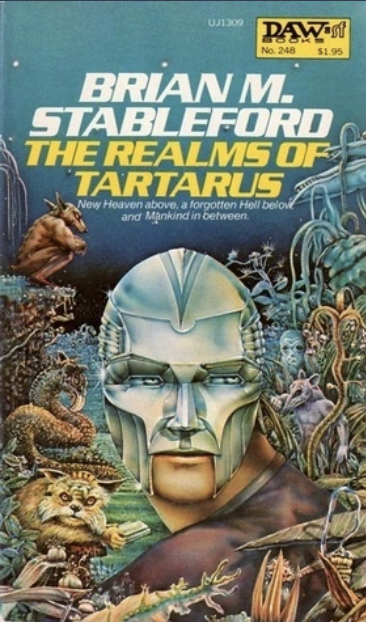
The Realms of Tartarus (1976) – a three decker novel:
The Face of Heaven (1976)
A Vision of Hell (1977)
A Glimpse of Infinity (1977)

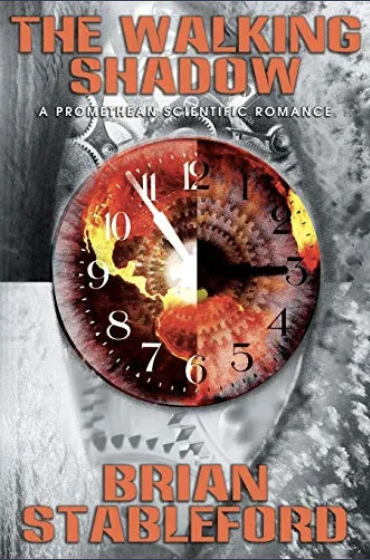
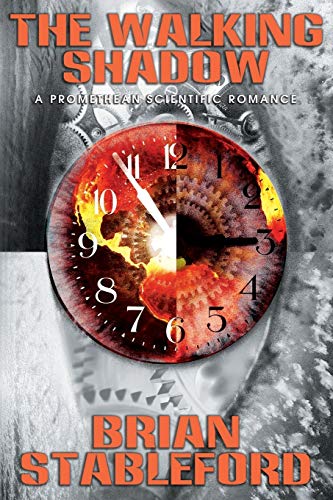
The Walking Shadow (1979)

The Walking Shadow: A Promethean Scientific Romance (Rockville, Maryland: Wildside Press/The Borgo Press, 2013) [vt of the above: pb/]

The Walking Shadow (London: Fontana, 1979) [pb/Terry Oakes]

Alien Abduction: The Wiltshire Revelations (2009)

Alien Abduction: The Wiltshire Revelations (San Bernardino, California: The Borgo Press/Rockville, Maryland: Wildside Press, 2009) [pb/]

(A terrible title for the novel. A better and more accurate title would be The Wiltshire Revelations: A Comedy of Sex and Alien Abduction)


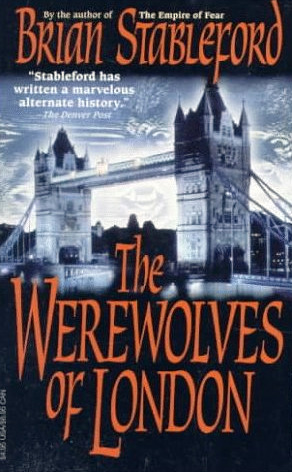
The David Lydyard trilogy or The Werewolves trilogy (as suggested by Dave Langford)

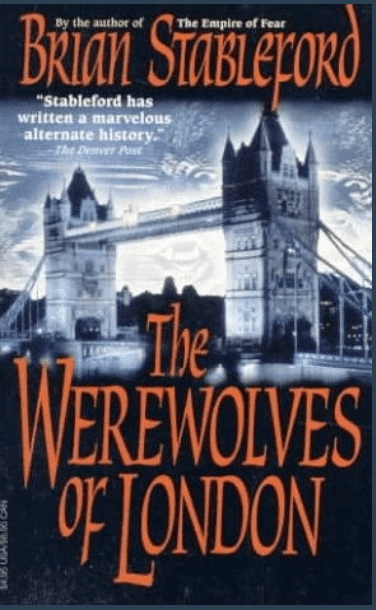
  • The Werewolves of London (Simon & Schuster UK July 1990)
  • The Carnival of Destruction (Pocket UK October 1994)
  • The Angel of Pain (Simon & Schuster UK August 1991)

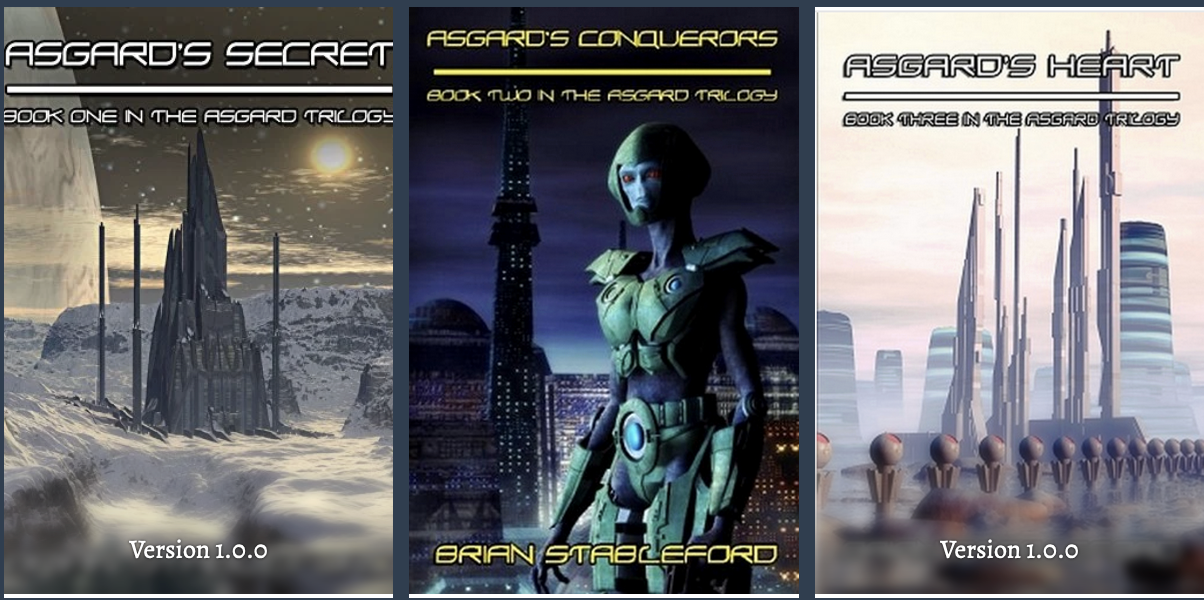
The Asgard three-decker. Enjoyable space adventure with interesting concepts concealed within.

  1. Asgard’s Secret (Five Star October 2004); revised and expanded from 2 earlier versions:
    • Journey to the Center (DAW 1982)
    • Journey to the Centre (NEL October 1989)
  2. Asgard’s Conquerors (Five Star December 2004); revised and expanded from an earlier version:
    • Invaders from the Centre (NEL January 1990)
  3. Asgard’s Heart (Five Star February 2005); revised and expanded from an earlier version:
    • The Centre Cannot Hold (NEL June 1990)

B. The usual works of Stableford considered by those who comment on his fiction.

Listed here as worth reading. They will be mentioned briefly.

Grainger/Hooded Swan

  1. The Halcyon Drift (DAW November 1972 / J. M. Dent 1974); also available as an ebook, listed at 58,069 words
  2. Rhapsody in Black (DAW June 1973 / J. M. Dent 1975); also available as an ebook, listed at 51,279 words
  3. Promised Land (DAW February 1974 / J. M. Dent September 1975); also available as an ebook, listed at 49,848 words
  4. The Paradise Game (DAW June 1974 / J. M. Dent 1976); also available as an ebook, listed at 50,303 words
  5. The Fenris Device (DAW December 1974 / Pan 1978); also available as an ebook, listed at 49,782 words
  6. Swan Song (DAW May 1975 / Pan 1978)

All 6 novels are also available in a special omnibus volume: Swan Songs (Big Engine April 2002 / SFBC April 2003)

Daedalus Mission

  1. The Florians (DAW September 1976 / Hamlyn 1978)
  2. Critical Threshold (DAW February 1977 / Hamlyn 1979)
  3. Wildeblood’s Empire (DAW October 1977 / Hamlyn 1979)
  4. The City of the Sun (DAW May 1978 / Hamlyn 1980)
  5. Balance of Power (DAW January 1979 / Hamlyn 1984)
  6. The Paradox of the Sets (DAW October 1979)

The Daedalus Mission books are good biological puzzle stories.

The Empire of Fear (London: Simon and Schuster, 1988) [hb/Brian Salmon]

Emortality

  • The Cassandra Complex (Tor March 2001); revised and expanded from:
  • “The Magic Bullet” (nv), Interzone #29 1989
  • Inherit the Earth (Tor September 1998); revised and expanded from:
  • “Inherit the Earth” (na), Analog July 1995
  • Dark Ararat (Tor March 2002)
  • Architects of Emortality (Tor September 1999); revised and expanded from:
  • Les Fleurs du Mal (na) Asimov’s October 1994;
  • The Fountains of Youth (Tor May 2000); revised and expanded from:
  • Mortimer Gray’s History of Death” (na), Asimov’s April 1995
  • The Omega Expedition (Tor December 2002); revised and expanded from:
  • “And He Not Busy Being Born…” (ss) Interzone #16 Summer 1986

The correct order for the Emortality hexateuch is: —

Emortality 1The Cassandra Complex (2001)
Emortality 2Inherit the Earth (1998)
Emortality 3Dark Ararat (2002)
Emortality 4Architects of Emortality (1999)
Emortality 5The Fountains of Youth (2000)
Emortality 6The Omega Expedition (2002)

C. An abbreviated list of Stableford’s critical non-fiction.

Scientific Romance in Britain, 1890–1950 (Fourth Estate September 1985 / St. Martin’s Press November 1985)

New Atlantis

A huge expansion and recasting of Scientific Romance in Britain 1890-1950 (1985):

New Atlantis: A Narrative History of Scientific Romance, Vol. 1: The Origins of Scientific Romance (Borgo Press February 2016)

New Atlantis: A Narrative History of Scientific Romance, Vol. 2: The Emergence of Scientific Romance (Borgo Press February 2016)

New Atlantis: A Narrative History of Scientific Romance, Vol. 3: The Resurgence of Scientific Romance (Borgo Press February 2016)

New Atlantis: A Narrative History of Scientific Romance, Vol. 4: The Decadence of Scientific Romance (Borgo Press February 2016)

The Plurality of Imaginary Worlds: The Evolution of French Roman Scientifique (Black Coat Press March 2016)

Science Fact and Science Fiction: An Encyclopedia (London: Routledge, 2006) [encyclopedia: hb/]

Heterocosms and Other Essays on Fantastic Literature (Borgo Press February 2007); also available as an ebook, listed at 89,003 words

Narrative Strategies in Science Fiction and Other Essays on Imaginative Fiction (Borgo Press December 2009)

D. Websites concerned with Brian Stableford:

https://sf-encyclopedia.com/entry/stableford_brian_m

https://www.isfdb.org/cgi-bin/ea.cgi?556

http://www.philsp.com/stableford/

Interesting articles in Links. There are reviews here too.

https://en.wikipedia.org/wiki/Brian_Stableford

Stableford produced so much that it is worth looking at the bibliographies at the above sites. The Wikipedia entry has links to interviews with BMS. Because they are done at different times you get sketches of the development of his career at different stages. It also has an excellent bibliography.

Because there is so much, yes, I am suggesting you can do your own research.

E. PUBLISHERS:

Places where Stableford’s books can be found. Mainly e-books, some are only available in print formats.

https://wildsidepress.com/authors-n-s/stableford-brian/?page=1

Wildside Press has many pages of his works.

https://www.kobo.com/au/en/search?query=brian+stableford&ac=1&acp=brian+stab&ac.author=brian+stableford&sort=PublicationDateDesc&fclanguages=en

Kobo also has many of his books, anthologies and translations. Dig deep.

Black Coat Press:

https://www.blackcoatpress.com/authors.html

Not the most easy access to find Stableford’s books. It’s a long way down to the letter ‘S’ and there are lots of other authors with names beginning with an ‘S’. This is where you can find Sherlock Holmes and the Vampires of Eternity (2009). Only available in paperback. But it’s worth it.

It also lists his anthologies and translations (which they call ‘adaptations’).

Snuggly Books:

Again you have to work down to S for Stableford. The only place for some of his last books. Plus anthologies and translations. A curiosity publisher. A title like Snuggly Tales of Femme Fatales feels simultaneously wrong and yet so perversely right.

F. A note about BMS:

Brian Stableford has been writing for fifty years. His fiction includes include eleven novels and seven short story collections in a series of “tales of the biotech revolution”; a series of metaphysical fantasies set in Paris in the 1840s, featuring Edgar Poe’s Auguste Dupin, most recently The Cthulhu Palimpsest; A Romance of Termination (2024); and a series of supernatural mysteries set in an artist’s colony, recently The Pool of Mnemosyne (2018). Recent novels independent of any series include Vampires of Atlantis (2016) and The Tangled Web of Time (2016). He also translates antique works from the French, with particular interests in the Symbolist and Decadent Movements, roman scientifique and the fantastique.

(Included to give a sense that Stableford was more than simply a science-fiction writer.)

G. Notes:

It is a quirk of my nature that give titles to talks like this; a way of putting things into one place conceptually. There are two jokes therein, well, sort of jokes. More like bits of irony. Another of my quirks.

Critical Mass, Oct 16th: Speculative Insight with Alexandra Pierce

“I believe in the importance of science fiction and fantasy to inform, explore and challenge society: where it is now,where it has been, and where it might go.”
Alexandra Pierce

Alexandra Pierce has been reading science fiction and fantasy since childhood. She did time as a book reviewer for ASiF! (Australian Speculative Fiction in Focus) and Strange Horizons, and currently reviews for Locus Magazine as well as on her own blog.
For a decade she was one third of the Hugo Award-winning podcast Galactic Suburbia. Alex co-edited two award-winning books, both with Australian indie publisher Twelfth Planet Press: Letters to Tiptree and Luminescent Threads: Connections to Octavia E Butler.

In January 2024 Alexandra launched Speculative Insight, publishing two essays a month about issues and themes in science fiction and fantasy. Born in Adelaide, Alex grew up in Darwin, moved to Melbourne for uni, and now lives in Ballarat.


In person: we are meeting once more at Kappy’s, 1/22 Compton St, Adelaide.
Turn up at 6:15 for a 6:30pm start on Wednesday, October 16th.

Zoom details for Critical Mass
Oct 16, 2024 6:30pm Adelaide, 7pm Melbourne/Sydney

Join Zoom Meeting
https://us06web.zoom.us/j/87224309964?pwd=pTIhAuiceNiJRIEKbikVJSAKmNQa1j.1

Meeting ID: 872 2430 9964
Passcode: 356300

Critical Mass, Nov 20: Farewell to the Master: Romancing Speculative Evolution

Brian Michael Stableford (1948 – 2024)

Jeff Harris’ talk at Critical Mass will be an overview of Stableford’s oeuvre.

(Nov 20th at the Minor Works Building)

A. There will be a focus on the following works:

Sherlock Holmes and the Vampires of Eternity (Black Coat Press January 2009) ISBN 978-1-934543-06-1;

(
book version of the following linked novellas:

  • “The Hunger and Ecstasy of Vampires” (na), Interzone January 1995 (+1) / (text restored) Mark V. Ziesing 1996, see above
  • “The Black Blood of the Dead” (na), Interzone January 1997 (+1)
  • “The Gateway of Eternity” (na), Interzone January 1999 (+1)

Stableford’s prefered title was The Gateway of Eternity). This novel has a complicated publication history.

The Realms of Tartarus (1976) – a three decker novel:
The Face of Heaven (1976)
A Vision of Hell (1977)
A Glimpse of Infinity (1977)

The Walking Shadow (1979)

The Walking Shadow: A Promethean Scientific Romance (Rockville, Maryland: Wildside Press/The Borgo Press, 2013) [vt of the above: pb/]

The Walking Shadow (London: Fontana, 1979) [pb/Terry Oakes]

Alien Abduction: The Wiltshire Revelations (2009)

Alien Abduction: The Wiltshire Revelations (San Bernardino, California: The Borgo Press/Rockville, Maryland: Wildside Press, 2009) [pb/]

(A terrible title for the novel. A better and more accurate title would be The Wiltshire Revelations: A Comedy of Sex and Alien Abduction)


The David Lydyard trilogy or The Werewolves trilogy (as suggested by Dave Langford)

  • The Werewolves of London (Simon & Schuster UK July 1990)
  • The Carnival of Destruction (Pocket UK October 1994)
  • The Angel of Pain (Simon & Schuster UK August 1991)

The Asgard three-decker. Enjoyable space adventure with interesting concepts concealed within.

  1. Asgard’s Secret (Five Star October 2004); revised and expanded from 2 earlier versions:
    • Journey to the Center (DAW 1982)
    • Journey to the Centre (NEL October 1989)
  2. Asgard’s Conquerors (Five Star December 2004); revised and expanded from an earlier version:
    • Invaders from the Centre (NEL January 1990)
  3. Asgard’s Heart (Five Star February 2005); revised and expanded from an earlier version:
    • The Centre Cannot Hold (NEL June 1990)

B. The usual works of Stableford considered by those who comment on his fiction. Listed here as worth reading. They will be mentioned briefly.

Grainger/Hooded Swan

  1. The Halcyon Drift (DAW November 1972 / J. M. Dent 1974); also available as an ebook, listed at 58,069 words
  2. Rhapsody in Black (DAW June 1973 / J. M. Dent 1975); also available as an ebook, listed at 51,279 words
  3. Promised Land (DAW February 1974 / J. M. Dent September 1975); also available as an ebook, listed at 49,848 words
  4. The Paradise Game (DAW June 1974 / J. M. Dent 1976); also available as an ebook, listed at 50,303 words
  5. The Fenris Device (DAW December 1974 / Pan 1978); also available as an ebook, listed at 49,782 words
  6. Swan Song (DAW May 1975 / Pan 1978)

All 6 novels are also available in a special omnibus volume: Swan Songs (Big Engine April 2002 / SFBC April 2003)

Daedalus Mission

  1. The Florians (DAW September 1976 / Hamlyn 1978)
  2. Critical Threshold (DAW February 1977 / Hamlyn 1979)
  3. Wildeblood’s Empire (DAW October 1977 / Hamlyn 1979)
  4. The City of the Sun (DAW May 1978 / Hamlyn 1980)
  5. Balance of Power (DAW January 1979 / Hamlyn 1984)
  6. The Paradox of the Sets (DAW October 1979)

The Daedalus Mission books are good biological puzzle stories.

The Empire of Fear (London: Simon and Schuster, 1988) [hb/Brian Salmon]

Emortality

  • The Cassandra Complex (Tor March 2001); revised and expanded from:
  • “The Magic Bullet” (nv), Interzone #29 1989
  • Inherit the Earth (Tor September 1998); revised and expanded from:
  • “Inherit the Earth” (na), Analog July 1995
  • Dark Ararat (Tor March 2002)
  • Architects of Emortality (Tor September 1999); revised and expanded from:
  • Les Fleurs du Mal (na) Asimov’s October 1994;
  • The Fountains of Youth (Tor May 2000); revised and expanded from:
  • Mortimer Gray’s History of Death” (na), Asimov’s April 1995
  • The Omega Expedition (Tor December 2002); revised and expanded from:
  • “And He Not Busy Being Born…” (ss) Interzone #16 Summer 1986

The correct order for the Emortality hexateuch is: —

Emortality 1The Cassandra Complex (2001)
Emortality 2Inherit the Earth (1998)
Emortality 3Dark Ararat (2002)
Emortality 4Architects of Emortality (1999)
Emortality 5The Fountains of Youth (2000)
Emortality 6The Omega Expedition (2002)

C. An abbreviated list of Stableford’s critical non-fiction.

Scientific Romance in Britain, 1890–1950 (Fourth Estate September 1985 / St. Martin’s Press November 1985)

New Atlantis

A huge expansion and recasting of Scientific Romance in Britain 1890-1950 (1985):

New Atlantis: A Narrative History of Scientific Romance, Vol. 1: The Origins of Scientific Romance (Borgo Press February 2016)

New Atlantis: A Narrative History of Scientific Romance, Vol. 2: The Emergence of Scientific Romance (Borgo Press February 2016)

New Atlantis: A Narrative History of Scientific Romance, Vol. 3: The Resurgence of Scientific Romance (Borgo Press February 2016)

New Atlantis: A Narrative History of Scientific Romance, Vol. 4: The Decadence of Scientific Romance (Borgo Press February 2016)

The Plurality of Imaginary Worlds: The Evolution of French Roman Scientifique (Black Coat Press March 2016)

Science Fact and Science Fiction: An Encyclopedia (London: Routledge, 2006) [encyclopedia: hb/]

Heterocosms and Other Essays on Fantastic Literature (Borgo Press February 2007); also available as an ebook, listed at 89,003 words

Narrative Strategies in Science Fiction and Other Essays on Imaginative Fiction (Borgo Press December 2009)

D. Websites concerned with Brian Stableford:

https://sf-encyclopedia.com/entry/stableford_brian_m

https://www.isfdb.org/cgi-bin/ea.cgi?556

http://www.philsp.com/stableford/

Interesting articles in Links. There are reviews here too.

https://en.wikipedia.org/wiki/Brian_Stableford

Stableford produced so much that it is worth looking at the bibliographies at the above sites. The Wikipedia entry has links to interviews with BMS. Because they are done at different times you get sketches of the development of his career at different stages. It also has an excellent bibliography.

Because there is so much, yes, I am suggesting you can do your own research.

E. PUBLISHERS:

Places where Stableford’s books can be found. Mainly e-books, some are only available in print formats.

https://wildsidepress.com/authors-n-s/stableford-brian/?page=1

Wildside Press has many pages of his works.

Kobo also has many of his books, anthologies and translations. Dig deep.

Black Coat Press:

https://www.blackcoatpress.com/authors.html

Not the most easy access to find Stableford’s books. It’s a long way down to the letter ‘S’ and there are lots of other authors with names beginning with an ‘S’. This is where you can find Sherlock Holmes and the Vampires of Eternity (2009). Only available in paperback. But it’s worth it.

It also lists his anthologies and translations (which they call ‘adaptations’).

Snuggly Books:

Again you have to work down to S for Stableford. The only place for some of his last books. Plus anthologies and translations. A curiosity publisher. A title like Snuggly Tales of Femme Fatales feels simultaneously wrong and yet so perversely right.

F. A note about BMS:

Brian Stableford has been writing for fifty years. His fiction includes include eleven novels and seven short story collections in a series of “tales of the biotech revolution”; a series of metaphysical fantasies set in Paris in the 1840s, featuring Edgar Poe’s Auguste Dupin, most recently The Cthulhu Palimpsest; A Romance of Termination (2024); and a series of supernatural mysteries set in an artist’s colony, recently The Pool of Mnemosyne (2018). Recent novels independent of any series include Vampires of Atlantis (2016) and The Tangled Web of Time (2016). He also translates antique works from the French, with particular interests in the Symbolist and Decadent Movements, roman scientifique and the fantastique.

(Included to give a sense that Stableford was more than simply a science-fiction writer.)

G. Notes:

It is a quirk of my nature that give titles to talks like this; a way of putting things into one place conceptually. There are two jokes therein, well, sort of jokes. More like bits of irony. Another of my quirks.

Hugo Nominees

The nominees in the fiction categories for the 2024 Hugos have been announced:

Best Novel
The Adventures of Amina al-Sirafi by Shannon Chakraborty (Harper Voyager, Harper Voyager UK)
The Saint of Bright Doors by Vajra Chandrasekera (Tordotcom)
Some Desperate Glory by Emily Tesh (Tordotcom, Orbit UK)
Starter Villain by John Scalzi (Tor, Tor UK)
Translation State by Ann Leckie (Orbit US, Orbit UK)
Witch King by Martha Wells (Tordotcom)
1420 ballots cast for 576 nominees. Finalists range 91-172.

Best Novella
“Life Does Not Allow Us to Meet”, He Xi / 人生不相见, 何夕, translated by Alex Woodend (Adventures in Space: New Short stories by Chinese & English Science Fiction Writers)
Mammoths at the Gates by Nghi Vo (Tordotcom)
The Mimicking of Known Successes by Malka Older (Tordotcom) 
Rose/House by Arkady Martine (Subterranean) 
“Seeds of Mercury”, Wang Jinkang / 水星播种, 王晋康, translated by Alex Woodend (Adventures in Space: New Short stories by Chinese & English Science Fiction Writers)
Thornhedge by T. Kingfisher (Tor, Titan UK) 
962 ballots cast for 187 nominees. Finalists range 106-186.

Best Novelette
I AM AI by Ai Jiang (Shortwave) 
“Introduction to 2181 Overture, Second Edition”, Gu Shi /〈2181序曲〉再版导言, 顾适 translated by Emily Jin (Clarkesworld, February 2023)
“Ivy, Angelica, Bay” by C. L. Polk (Tor.com 8 December 2023) 
On the Fox Roads” by Nghi Vo (Tor.com 31 October 2023) 
“One Man’s Treasure” by Sarah Pinsker (Uncanny Magazine, January-February 2023) 
“The Year Without Sunshine” by Naomi Kritzer (Uncanny Magazine, November-December 2023) 
755 ballots cast for 212 nominees. Finalists range 40-117.

Best Short Story
“Answerless Journey”, Han Song / 没有答案的航程, 韩松, translated by Alex Woodend (Adventures in Space: New Short stories by Chinese & English Science Fiction Writers)
“Better Living Through Algorithms” by Naomi Kritzer (Clarkesworld May 2023) 
“How to Raise a Kraken in Your Bathtub” by P. Djèlí Clark (Uncanny Magazine, January-February 2023) 
“The Mausoleum’s Children” by Aliette de Bodard (Uncanny Magazine, May-June 2023)
The Sound of Children Screaming” by Rachael K. Jones (Nightmare Magazine, October 2023) 
美食三品 (“ s”), 宝树 / Baoshu (银河边缘013:黑域密室 / Galaxy’s Edge Vol. 13: Secret Room in the Black Domain) 
720 ballots cast for 612 nominees. Finalists range 27-69.

For the full list of nominees see Locus magazine: 2024 Hugo, Astounding, and Lodestar Awards Finalists

the Reactor Science Fiction Film Club

Ever since Méliès sent his characters to the Moon in 1902, filmmakers have never stopped making science fiction movies. From very early adaptations of the works of Mary Shelley, Jules Verne, and Arthur Conan Doyle all the way up through the juggernaut franchises we have today, from short films to weighty epics, political allegories to gee-whiz adventure stories, arthouse darlings to summer blockbusters, moody emotional ponderings to gloriously gory monster mashes, the history of cinema is inextricably linked with the genre of science fiction.

And the Reactor Science Fiction Film Club is here to explore every corner of it!

How will it work?

Once a week, one movie at a time, we’ll watch our way through the good, the bad, and the utterly bizarre in science fiction cinema. I’ll share the month’s selections ahead of time, and each Wednesday I’ll post an essay about that week’s film, including a bit about its history, context, and impact, to revel in the weird and wonderful variety of sci-fi movies out there. Everybody will be welcome to share their thoughts in comments, whether you’re watching it now for the first time or saw it years ago.

What are we going to watch?

Anything. Everything. In any language, from anywhere in the world. As long as it’s science fiction. Some of the films we watch will be masterpieces. Some of them will be terrible. Some will be both, as is often the case. Some of them will be very familiar. Some will be obscure. Some will be movies you love. Some will be movies you, personally, hate. I am going to approach all of them with an open mind, a generosity of spirit, and the goal of having fun with a century of sci-fi movie magic. (The oldest film on my list is currently Aelita (1924), so that time frame is not an exaggeration. Depending on availability we might even look at some earlier movies.) Many of the movies will be paced much more sedately than modern films, so grab a cozy blanket, pour a glass of wine, put your phone down, and relax. Space epics, time travel, claustrophobic horrors, psychological mindfucks, political satires, alien invasions, Barbarella—it’s all good


How do we watch the movies?

Everything I’m choosing is available for online streaming somewhere, because I am not going to make anybody rely on access to a dusty box of VHS tapes in their friend’s neighbor’s uncle’s attic. Sometimes it might be a bit complicated, but I will do my best to provide up-to-date information and options. How you access the films from where you live, within your budget, is between you and your VPN. I recommend checking a site like JustWatch or similar to search for availability in different regions. When in doubt: check your local library or search YouTube and the Internet Archive.

We’re going to get started in March with a selection of classics that imagine the many problems people will face when they head out to explore space. The films are listed below by the date on which the column will be published, so you can watch ahead of time and participate in the discussion.

March 6 – Forbidden Planet (1956), directed by Fred M. Wilcox
A cautionary tale about packing too much Freudian psychology in your space luggage.
Watch: Tubi (free), Amazon, Apple, Google Play, and several other places as well.
Watch a trailer here.

March 13 – Solaris (1972), directed by Andrei Tarkovsky
Famously disliked by author Stanislaw Lem but beloved by just about everybody else.
Watch: Max, Criterion, Amazon, Apple, and others.
Watch a trailer here.

March 20 – Silent Running (1972), directed by Douglas Trumbull
It’s basically Gardeners’ World in space, right? …Right?
Watch: Amazon, Apple, Google Play, Vudu, and others.
Watch a trailer here.

March 27 – Ikarie XB-1 (1963), directed by Jindřich Polák
It was dubbed and released in the U.S. as Voyage to the End of the Universe, but the dubbed version has a very different ending.
Watch: Criterion, Cultpix (some locations), British Film Institute (UK only), and I might gently suggest doing a YouTube search, if you are so inclined.
Watch a trailer here.

Kali Wallace, Introducing the Reactor Science Fiction Film Club! from reactormag.com