A farewell to Yvonne Rousseau

By Bruce Gillespie

With great sorrow we learn that Yvonne Rousseau died on Saturday, 13 February, in the Heidelberg Repatriation Hospital, Melbourne, from Parkinson’s disease. She had suffered from Parkinson’s from before she returned to Melbourne from Adelaide four years ago, after her husband John Foyster died there in 2003, but had entered hospital only two months ago.

She leaves behind her daughter Vida Weiss (who has kept us all informed over recent months), her sisters Val and Glenda, and her brother Linton, and their families; sister-in-law Jo; and former husband Mick Weiss, as well as the friends who enabled her to move back to Melbourne (Kathy and Ian, and Jane and Richard). Her brother George died several years ago.

She had a great ability to make and keep close personal friends, including those in the worldwide science fiction community and the Australian literary and editing world.

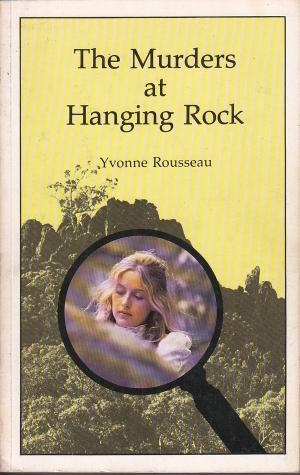
She was a Life Member of the Victorian Society of Editors, and was the author of The Murders at Hanging Rock, several published short stories (the best known being “The Importance of Being Oscar”), and many penetrating critical and personal articles.

She was a member of the Collective who published Australian Science Fiction Review, Second Series, and contributor to ASFR, SF Commentary, and many other publications. We feel keenly the loss of Yvonne’s generous and modest personality and her fine mind.

The Scientific Romance

“Scientific romance” is now commonly used to refer to science fiction of the late nineteenth and early twentieth centuries, as in the anthologies Under the Moons of Mars: A History and Anthology of “The Scientific Romance” in the Munsey Magazines, 1912-1920 and Scientific Romance in Britain: 1890-1950. One of the earliest writers to be described in this way was the French astronomer and writer Camille Flammarion, whose Recits de l’infini and La fin du monde have both been described as scientific romances. The term is most widely applied to Jules Verne, and H. G. Wells, whose historical society continues to refer to his work as ‘scientific romances’ today.
Edgar Rice Burroughs’s A Princess of Mars (1912) is also sometimes seen as a major work of scientific romance, and Sam Moskowitz referred to him in 1958 as “the acknowledged master of the scientific romance,” though the scholar E. F. Bleiler views Burroughs as a writer involved in the “new development” of pulp science fiction that arose in the early 20th century. The same year as A Princess of Mars, Sir Arthur Conan Doyle published The Lost World,which is also commonly referred to as a scientific romance.
1902 saw the cinematic release of Georges Méliès’s film Le Voyage dans la Lune (A Trip to the Moon); the time period and the fact that it is based partially on works by Verne and Wells has led to its being labelled as a scientific romance as well.

from https://en.wikipedia.org/wiki/Scientific_romance

The latest Coode St Podcast, episode 451, has an interesting discussion on the “scientific romance” with John Clute: John Clute and Science Fiction Repeting the Future

Best Work

Then there was Kim Stanley Robinson’s towering The Ministry for the Future. It was published in October, but I got to read it in mid-February. It struck like a mallet hitting a gong, reverberating through the year. Told mostly from the perspectives of a young aid worker who survives a horrific tragedy in India and a middle-aged Irish bureaucrat running a UN body tasked with representing the rights of future generations in a time of eco-collapse, it’s terrifying, unrelenting, but ultimately hopeful. Robinson is the SF writer of my lifetime, and this stands as some of his best work. It’s my book of the year.

Jonathan Strahan, Notes from a Year Spent indoors…, Locus Magazine

Boskone’s interview series

Boskone 58, to be held February 12-14 has been running a series of interview posts.

Dr. Gillian Polack

…If you were planning a holiday or vacation and could visit any location, whether in the real world or fictional worlds, where would you go? Why? 

I love portal fantasies. I always dreamed of the doors in other peoples’ writing and of walking through those doors into enchanted lands. Then I wrote my own. I now want to visit the house in Borderlanders and travel to strange places. I seldom want to visit anywhere I’ve written about, for I know all the downsides of all the places, but doors that lead to hidden seas or to rooms lined with liquid glass? That’s different.

more interviews & details from file770.com

‘Man Who Fell to Earth’ Series in production at Paramount Plus

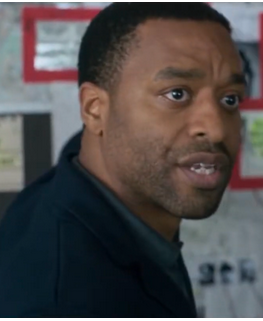
Chiwetel Ejiofor has been cast in the lead role of “The Man Who Fell to Earth” series currently in the works at Paramount Plus, Variety has learned.
The series is based on Walter Tevis’ 1963 novel and the 1976 Nicolas Roeg film that starred David Bowie, both of the same name. In the series version, a new alien character (Ejiofor) arrives on Earth at a turning point in human evolution and must confront his own past to determine our future.

see details in the piece by Joe Otterson, Variety

Critical Mass Feb 17th: At the Movies

This month’s Crit Mass will be an in person meeting at Kappys!

(You can also join via zoom if you think it’s too soon for public gatherings)
We’re inviting members to pick 5 sf films they’d like to talk about (whether for good or ill is up to them), and to gather at Kappys Tea & Coffee merchants, 22 Compton St Adelaide, from 6:45pm for a 7pm start of the Crit Mass meeting on February 17th. Old or New, Good or Bad, let us know why the film is of interest!
As you might expect, you’ll have to conform to Kappys COVID requirements.
For those who wish to join remotely:
Topic: Crit Mass, Adelaide
Time: Feb 17, 2021 07:00 PM Adelaide, 7:30 Melbourne
Join Zoom Meeting
https://us02web.zoom.us/j/83772232344?pwd=cDhjVjZNWG5NelhMaEtuWjJaVVdjdz09

Meeting ID: 837 7223 2344
Passcode: CritMass

Crit Mass: Is it time to gather again?

Several members have asked whether it might not be time to meet in person again. If we wished to meet at Kappy’s for the February meeting, they would be willing to host us.

Two questions then, for the members of Critical Mass in Adelaide:
(i) do we want to gather in person in February? or is it too soon?
(ii) who wishes to talk about something this month?

We intend to continue with a zoom component, for those interested who might not be able to meet in person.
Please respond to these questions to either Roman or Adam, so that we might make appropriate action.

Nova Mob, Feb 3rd — Gothic Architectures of the Mind

from the Nova Mob newsletter
Our first meeting of the year is on 3 February at Kensington Town Hall 8.00pm!  And also in Zoom!
Yes we are able to meet again in person, with quasi-embarrassed elbow bumps, diligent hand hygiene, and suitable record-keeping. But we’ll still be doing Zoom, running it at the same time as the in-person meeting. I’d like to introduce our guest speaker for the 3rd Feb: 

DMETRI KAKMI, who will be taking us on a reader’s, writer’s, and editor’s traverse through the gothic architectures of the mind.
Dmetri immersed himself in horror novels and films during his childhood, and those wide-ranging reading habits in the gothic have culminated in him writing in the genre and bringing that knowledge to his role as senior editor. This could lead to interesting discussions about how genre writing is perceived in major publishing houses in Australia, insights into favourite authors, digressions, etc.

Wednesday February 3rd 8.00pm – 9.30 pm or so, [7:30pm Adelaide time]
first floor Conference Room, Kensington Town Hall
30 – 34 Bellair St Kensington VIC 3031

Kakmi notes:
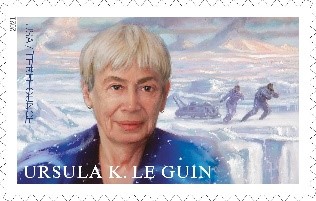
“To give you an overview, from the late 1970s I started reading Stephen King, Ursula Le Guin, Arthur C Clarke, Richard Matheson, Ray Russell, Alfred Bester, Anne Rice, Chelsea Quinn Yarbro, M R James, Algernon Blackwood, Arthur Machen etc. In terms of influences on my writing, I look to Shirley Jackson (I gave an online lecture about The Haunting of Hill House at Writers Victoria mid 2020), Susan Hill, Patrick MacGrath and Robert Aikman. Certainly, these four hang heavy over The Door and Other Uncanny Tales.”

The Door and Other Uncanny Tales has just been published; copies will be on sale and can be signed or inscribed or indeed both. See below for the official bio, to which we append Lucy Sussex’s commendation: “Dmetri? He’s most amusing”.  In order to belie that reputation, Dmetri has provided a photo of himself in Serious Author mode.

Dmetri Kakmi was born to Greek parents in Turkey. For 15 years he worked as senior editor at Penguin Books. The memoir Mother Land was shortlisted for the NSW Premier’s Literary Awards 2008, and is published in England and Turkey. He is the editor of the acclaimed children’s anthology When We Were Young. The essay ‘Night of the Living Wog’ is published in Joyful Strains: Making Australia Home, edited by Kent MacCarter and Ali Lemer. ‘A History of Violence’ is published in The Body Horror Book, edited by Claire Fitzpatrick. ‘The Tranny Horror From Outer Space’ is published in Ornaments From Two Countries, edited by Peter Polites. The short story ‘The Boy by the Gate’ was reprinted in The Year’s Best Fantasy and Horror 2013. ‘Haunting Matilda’, published in Cthulhu Deep Down Under, was shortlisted for Best Fantasy Novella in the Aurealis Awards, 2015. Both of these stories are reprinted in Dmetri’s new book The Door and Other Uncanny Tales, which was released in late 2020. He lives in Melbourne.
Website: dmetrikakmi.com.au

By Zoom:
Can’t attend in person? The Nova Mob invites you to a scheduled Zoom meeting. 
Topic: Nova Mob 3 Feb Dmetri Kakmi 8.00pm AEDT, 7:30 Adelaide time
Time: Feb 3, 2021 login after 7.20 PM Adelaide time
https://us02web.zoom.us/j/4177583193?pwd=VjdPL1BhSTBNclN2YnRsejN3Y1hlUT09

Meeting ID: 417 758 3193 Passcode: nova

Kathleen Jennings on Gothic

Our guest speaker from October has just published an article on tor.com called Six Stories for Fans of Beautiful Australian Gothic:

Like most Gothics, the Australian Gothic has acquired its own distinct aesthetic—most frequently, an abject unpleasantness and atmosphere of sand-scoured horror. Personally, I’d like to blame both Evil Angels (aka A Cry in the Dark) and Gary Crew’s memorably effective Strange Objects (1990) for many of my own nightmares.

It is also, like most Gothics, tangled up with the genre’s own past, and inextricably knotted into colonial and imperial histories as well as the multitude of other mirrored and recurring histories typical of a Gothic plot. And Australia has a bloody history, with terrible things done and still being done. Yet there are also stories which, without shying away from terrors (although not necessarily innately any better at handling the true history than other varieties of Australian Gothic), manage in a variety of fascinating ways to capture a sense of great (even sublime, often terrifying, never false) beauty.

— Kathleen Jennings, “Six Stories for Fans of Beautiful Australian Gothic“, tor.com, Jan 19th