A new Jonathan Carroll

“When she got home from Bellport’s office she made a cup of coffee and took it to her desk. Fittingly, she took out the gorgeous, carmine-red, Japanese lacquer fountain pen he had given her for her birthday many years before. The great irony was although she loved pens, notebooks, and everything to do with handwriting, hers was absolutely atrocious and had been all of her life. It was tiny and almost indecipherable to anyone but herself. He once said it looked like someone dipped a pigeon’s feet in ink then let it walk across the page. He was right. It had always embarrassed her, and put side to side with his precise, singular, almost calligraphic script, it was like comparing gravel to a diamond.”

—- from Played Your Eyes, a new Jonathan Carroll short Story at tor.com

Butler in Space!

The IAU is naming features on Charon, Pluto’s moon, and have decided to honour Octavia Butler by naming a mountain after her. Butler Mons joins a host of other names celebrating the spirit of human exploration at the furthest reaches of our solar system.

Crit Mass, April 4th: Digital Humanities Part II

Andrew is presenting Critical Mass, 7pm at Kappys.

With great sadness we mourn the passing of Ursula Le Guin in January of this year. During her literary career she was won numerous awards. Including two Hugos (Left Hand of Darkness and Dispossessed) and four Nebulas (Left Hand of Darkness, Dispossessed, Powers and Tehanu); more Nebula awards than any other author.

There are many aspects of her writing that I appreciate, one of which is her brevity. Her novels are complete, each with a beginning, a middle and an end; offering intrigues, character development, and cathartic conclusions. However in comparison to modern works of fiction I find her novels exceptionally short. I often wonder whether novel length has evolved over time, or was perhaps Le Guin unusually concise?

To address these questions we examine the list Hugo and Nebula winners over the past 65 years, comparing Le Guin’s novels with other winners, and assess how novel length has varied over time.

Hard to be A God premiere

Hard

Cinémathèque at the Mercury starts its After Year Zero mini season with Alexsei German’s Hard to be A God7pm Mon 23rd April. This will be the first public screening in Adelaide of this extraordinary film, based on the Strugatsky’s novel.

Also in the season are:

  • Stanley Kramer’s On the Beach, 7pm Mon 30th April
  • Jeunet & Caro’s Delicatessen, 7pm Wed 2nd May
  • Bong Hoon’s Snowpiercer, 7pm Mon 7th May
  • Terry Gilliam’s Twelve Monkeys, 7pm Wed 9th May

A four film pass to Cinémathèque screenings will cost you $40 / $30 conc.

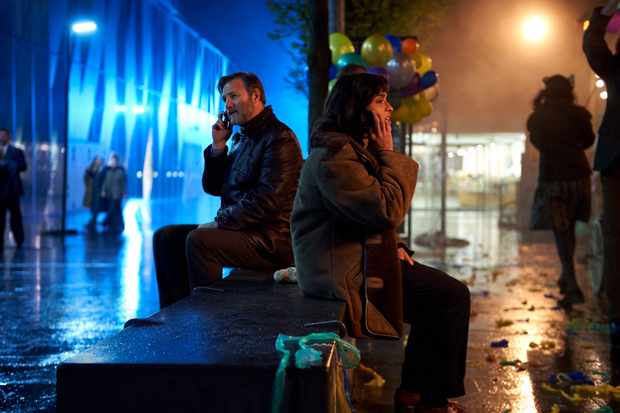
Annihilation is Amazing, and Full of Women

Liz Bourke writes in her new column over at Tor.com:

Annihilation is luminous. It’s dizzying and visionary and strange, a balletic question with no certain answer, peculiar and horrifying and layered and gorgeous, and lit from within with its own artistic vision: unified, structurally and thematically, in a way that few Hollywood films ever are. It’s a film that speaks with its silences, embraces them. It layers implication, symbolic meaning, from the opening shot of a dividing and re-dividing cell—revealed by Natalie Portman’s Lena in a lecture to her students to be a tumour cell—to its asides about grief and self-destruction, and from the horrifying wonders (and bewildering horrors) of the Shimmer to the fact that the film is subtly framed as Lena’s narrative, and all things considered (“Lena is a liar,” as Anya Thorensen, played with brilliant intensity by Gina Rodriguez, says in a moment fraught with psychological horror), we can’t be entirely sure about our narrator’s reliability.

Missing Gems

JMFordJohn M. Ford’s Growing Up Weightless is one of the two best Heinlein juveniles not written by Heinlein (the other being Alexei Panshin’s Rite of Passage.). A lean, vividly imaged coming-of-age story set on the Moon, it should be a classic of science fiction. It isn’t (or at least, not one that’s easy to track down). Ford died tragically young without having designated a literary executor. The rights to his works reverted to his blood relatives, who seem intent on erasing evidence of Ford’s writing career. While Tor has done a masterful job of keeping their John M. Ford books, The Last Hot Time and Heat of Fusion and Other Stories in print, Growing Up Weightless was published by Bantam and is out of print.

— just one of several books noted by James Davis Nicoll in his piece “Why the Hell Are These Books Out of Print?” published by Tor

L’Engle accused of witchcraft

It took 26 publisher rejections before Madeleine L’Engle could get “A Wrinkle in Time” into print in 1962. The book was an instant hit, winning the Newbery Medal the following year, but despite its wild success, L’Engle still had fierce critics — including a good number of them who disliked her book for faith reasons.

While L’Engle considered herself a devout Christian, and sprinkled the book with scriptural references, she was accused by some conservative Christians of promoting witchcraft and the occult — an accusation made later against “Harry Potter” author J.K. Rowling.
— “Publishers rejected her, Christians attacked her: The deep faith of ‘A Wrinkle in Time’ author Madeleine L’Engle” by Sarah Pulliam Bailey, Washington Post

The Tiptrees

Virginia Bergin has won the 2017 Tiptree Award for her novel Who Runs the World? (Macmillan, UK, 2017). (The novel will be published in the US in November 2018 under the title The XY (Sourcebooks, 2018).

Who Runs the World? is a young adult novel that tells an intricately layered tale of intergenerational struggle and cooperation, the dehumanizing force of gender stereotypes, and the moral courage it takes to challenge cultural and political norms. Bergin invokes a premise familiar in feminist science fiction—a plague that kills nearly everyone with a Y chromosome. Without relying on biological determinism, Bergin uses this premise to develop a vividly imagined feminist society, and to grapple with that society’s changes and flaws over time.

The Honour List

In addition to selecting the winners, the jury chooses a Tiptree Award Honor List. The Honor List is a strong part of the award’s identity and is used by many readers as a recommended reading list. These notes on each work are excerpted and edited from comments by members of this year’s jury. This year’s Honor List is:

Charlie Jane Anders, “Don’t Press Charges and I Won’t Sue” (Boston Review, USA, 2017)
This graphic and visceral dystopia shows trans people stripped of their legal rights, abducted, and operated on in the name of “curing” their gender identities. Harrowingly portrayed through the viewpoints of both victim and perpetrator, the story describes a medicalized torture resonant with real-world histories of violent “treatment” for gender deviance that was routine only a few decades ago.

Indra Das, The Devourers (Del Rey, USA, 2016)
A fascinating, memorable novel that uses a nested narrative to thread its story through Indian history, from the 17th-century Mughal Empire to contemporary Kolkata. The structure uses multiple points of view to mirror the perspective of the book’s magical characters: a species of predatory shape-shifters who gain access to the memories of the people they consume. Inspired by mythological beings that include werewolves, djinn, and rakshasa.
April Daniels, Dreadnought and Sovereign (Diversion, USA, 2017)
The first two books of a trilogy, these novels follow Danny, a transgender teenage girl stuck living as a boy. A chance meeting with a dying superhero allows Danny to have her deepest desire granted, with the side effect that she’s now the most powerful superhero on the planet.

Maggie Shen King, An Excess Male (Harper Voyager, USA, 2017)

A novel of exquisitely deep, nuanced characterization, set in a future China where there are forty million more men than women. This book explores polyandrous marriage, non-neurotypical cognition, state-sanctioned homophobia, and the dynamics of bonding in male-only spaces..

Carmen Maria Machado, Her Body and Other Parties (Gray Wolf, USA, 2017)
A collection of short stories that explore the cultural treatment of women’s bodies, written with stunning artistry. Machado offers a multifaceted view of the insides and undersides of queer kinds of femininity that we mostly never see, brought into the light in all their darkness and brightness, sweetness and ugliness.
Rivers Solomon, An Unkindness of Ghosts (Akashic, USA, 2017)
A powerful novel of individual and collective survival in the face of generational trauma. On a generation ship, the Black inhabitants of the lower decks live and work under brutal conditions that recall slavery in antebellum America. The story follows lowerdecker Aster as she struggles to survive and make sense of her world.
JY Yang, “Black Tides of Heaven” and “Red Threads of Fortune” (Tor, USA, 2017)
Set in a society where children are without gender until they choose to be confirmed into a specific identity, these paired silkpunk novellas follow aristocratic twins from their identical childhoods through increasingly divergent adulthoods. The first is a bildungsroman of Akeha, the male twin, who must learn himself at a young age because he lacks any defined place within his family or culture. The second is a recovery narrative of Mokoya, the female twin, whose relatively frictionless path through life demands of her little introspection, until a traumatic event upends her sense of self, requiring she build a new understanding of her identity to navigate her grief. Both stories explore the process of struggling past expectation to achieve self-definition.

More details at /tiptree.org/2018/03/virginia-bergin-wins-2017-tiptree-award-honor-list-and-long-list-announced

Crit Mass Mar 7th: Adam on Stereotypes

Adam Jenkins is speaking this wednesday for Critical Mass.

“Using fan fiction to evaluate character preferences”

Stardew Valley is on of the most popular videos games in the fantasy romance/farming simulator category – a particularly small category of games, but strangely one that has considerable popularity. As part of its popularity it has spawned a great deal of fan fiction as people explore the romance options beyond what is outlined in the game. Social media is increasingly being used to evaluate the potential success (or otherwise) of genre fiction, and here is an opportunity to explore whether or not fan fiction can be similarly employed.
7pm Wednesday, March 7th at Kappys at 22 Compton St, near the market.
Doors open at 6:45

Bill McKibben on SF

Bill McKibben ( founder of 350.org) has long advocated for more people to use the power of art to tackle climate change. He recently appeared on the podcast Geek’s Guide to the Galaxy.

“I wrote a piece maybe 15 years ago arguing that there had been very limited artistic response to climate change, which was odd given the scale and magnitude,” he says. “And I’m very glad to see that changing on every front.”

One group of artists who has tackled climate change is science fiction writers, with authors like Kim Stanley Robinson, Paolo Bacigalupi, and Tobias Buckell comprising the so-called “cli-fi” movement. In particular McKibben praises Kim Stanley Robinson’s recent novel New York 2140, which depicts a future in which rising seas have transformed New York into a city of canals. “For my money the best science fiction—and in many ways the best fiction—of the last year was New York 2140,” he says. “It’s a wonderful and oddly cheerful book, I must say. I really, really enjoyed it.”

McKibbben also praises science fiction writers for addressing the dangers of emerging technologies like genetic engineering, nanotechnology, and AI.

“I’ve thought for the last 20 years that science fiction was really the only realm where people were dealing intelligently with some of these questions,” he says. “They were the only people who were having to perform the thought experiment of putting the potential power of these technologies up against the scale of human beings—of their characters—and just figuring out that human beings quickly got overwhelmed by technology at this scale.”

Listen to the complete interview with Bill McKibben in Episode 293 of Geek’s Guide to the Galaxy.