Locus recommends

Each february, the writers/reviewers from Locus magazine publish their recommended reading list.

NOVELLAS

A Blessing of Unicorns, Elizabeth Bear (Audible Originals 10/20; Asimov’s 9-10/21)
A Psalm for the Wild-Built, Becky Chambers (Tordotcom)
“Arisudan”, Rimi B. Chatterjee (Mithila Review 3/22/21)
Defekt, Nino Cipri (Tordotcom)
Fireheart Tiger, Aliette de Bodard (Tordotcom)
“Sleep and the Soul“, Greg Egan (Asimov’s 9-10/21)
Lagoonfire, Francesca Forrest (Annorlunda)
“Philia, Eros, Storge, Agápe, Pragma”, R.S.A Garcia (Clarkesworld 1/21)
The Album of Dr. Moreau, Daryl Gregory (Tordotcom)
A Spindle Splintered, Alix E. Harrow (Tordotcom)
& This is How to Stay Alive, Shingai Njeri Kagunda (Neon Hemlock)
“The Dark Ride”, John Kessel (F&SF 1-2/21)
In the Watchful City, S. Qiouyi Lu (Tordotcom)
And What Can We Offer You Tonight, Premee Mohamed (Neon Hemlock)
The Annual Migration of Clouds, Premee Mohamed (ECW)
The Return of the Sorceress, Silvia Moreno-Garcia (Subterranean)
“A Rocket for Dimitrios“, Ray Nayler (Asimov’s 1-2/21)
Remote Control, Nnedi Okorafor (Tordotcom)
“The Abomination”, Nuzo Onoh (F&SF 9-10/21)
“Submergence”, Arula Ratnakar (Clarkesworld 3/21)
Flowers for the Sea, Zin E. Rocklyn (Tordotcom)
The Necessity of Stars, E. Catherine Tobler (Neon Hemlock)
“The Giants of the Violet Sea”, Eugenia Triantafyllou (Uncanny 9-10/21)
Comfort Me With Apples, Catherynne M. Valente (Tordotcom)
The Past is Red, Catherynne M. Valente (Tordotcom)
The Secret Skin, Wendy N. Wagner (Neon Hemlock)
Fugitive Telemetry, Martha Wells (Tordotcom)
“A Canticle for Lost Girls”, Isabel Yap (Never Have I Ever)

The full list is at https://locusmag.com/2022/02/2021-recommended-reading-list/

Suggestions from Crit Mass

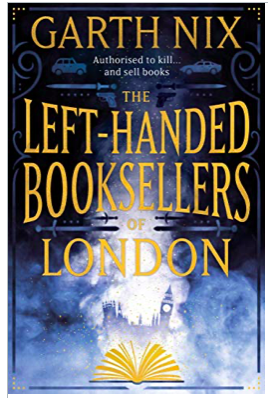
LynC suggested the recent Garth Nix, The Left-handed Booksellers of London, or if we were looking for an interesting mystery series, The Vinyl Detective by Andrew Cartmel: Written in Dead Wax (2016); The Run-Out Groove (2017);
Victory Disc (2018);
Flip Back (2019);
Low Action (2020)
& Attack and Decay (2022)

Jane Routley noted she was really enjoying P Djèlí Clark’s A Master of Djinn, the novel set in an alternative Cairo, following on from the novellas Dead Djinn in Cairo and The Haunting of Tram Car 015.

Kate Treloar picked a classic:
E M Forster’s The Machine Stops

Ruth Jenkins suggested The Apollo Murders by Chris Hadfield and the alternate history collection Sideways in Crime edited by Lou Anders

Adam Jenkins mentioned
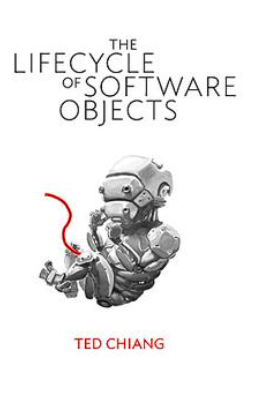
The Lifecycle of Software
Objects
by Ted Chiang, but
chose the manga ōsō no
Furīren,
“Frieren of the
Funeral” as consistent good
storytelling.

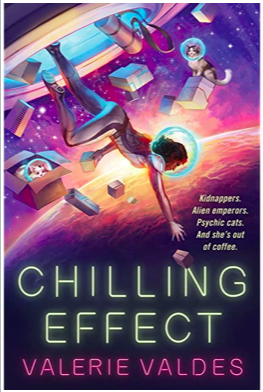
Beata Sznajder considered Space Opera by Catherynne M Valente, but recommended Chilling Effect by Valerie Valdes.

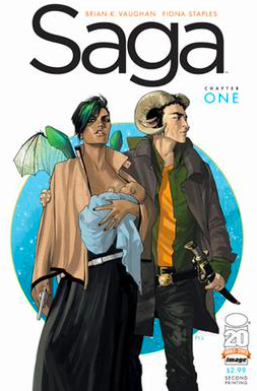
Andrew Vincent considered graphic novels: he mentioned Saga, but thought the story overly long, and preferred Rat Queens.

Andrew’s ultimate choice was an online computer game, Wildermyth, available on Steam:
https://store.steampowered.com/app/763890/Wildermyth/

Jocko suggested Hail Mary by Andy Weir.

Jeff Harris talked about time travel invasions: Invasion from 2500 by Norman Edwards (a pseudonym for Ted White and Terry Carr) from 1964,
and Clifford Simak’s Our Children’s Children (1974),
but settled enthusiastically
on Ken MacLeod’s Selkie Summer (2020).

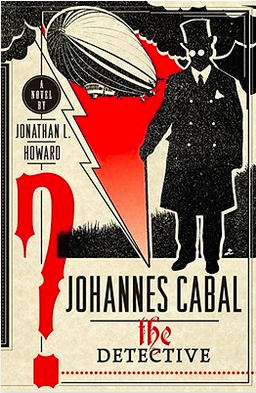
Roman suggested the second of the Johannes Cabal novels by Jonathan L Forward, Johannes Cabal — The Detective, from 2010. He was reminded of the series about a necromancer when he listened to an audio-book (Blustery Day) of short stories about Cabal.
Johannes Cabal the Necromancer, 2009
Johannes Cabal the Detective, 2010
Johannes Cabal: The Fear
Institute,
2011
The Brothers Cabal, 2014
Johannes Cabal and the Blustery Day: And Other Tales of the Necromancer, 2015 (collection)
The Fall of The House of Cabal, 2016

The Bat-usi

A pop-culture giant has shuffled off this four-color coil. Adam West, who played the title role in the 1966 Batman, and later reprised the role in voice and physical form more than once, has died of leukaemia at the age of 88.

Keith R.A. DeCandido picked his five best bat-moments, including the Bat-usi:

the entire scene in the bar that leads up to Batman doing that magnificent dance in “Hi Diddle Riddle,” the first episode of Batman to air, is pretty much vintage West Batman. We start with him entering the discotheque and refusing the offer of a table, instead going to the bar because he doesn’t want to draw attention to himself. Reportedly, that scene was the one West read for his audition, and one of the reasons why he got the part was that he played that line 100% straight rather than wink at the camera or be a goof about it. Perhaps the best thing about West’s portrayal was that he took it completely seriously. He refused to stoop to the joke, which is why little kids (like me!) could watch the show unironically and view Batman as a hero who did good. We took him seriously as a hero because he took himself seriously as one.
Even when it was totally ridiculous. Like trying to be inconspicuous while walking into a discotheque while wearing a brightly colored skintight outfit and a big blue cape. And dancing a silly dance, though the latter was after they put a mickey in his fresh-squeezed orange juice.

https://www.tor.com/2017/06/12/adam-wests-five-best-bat-moments/

Crit Mass Feb 23: A delight of stories

People are asked to bring along an SF&F novel/novella they enjoy, and tell us why they think it’s interesting. (Assume you have 5-7mins to convince us.) We will each choose one of the suggested works to read and report on at the March meeting.

Given the current state of the covid outbreak, the February meeting will be zoom only.

Critical Mass
Feb 23, 2022 6:30pm Adelaide, 7pm Melbourne

Join Zoom Meeting
https://us02web.zoom.us/j/82167796217?pwd=M2d0aUMwU01nbVVPa2g0czNXTjQxUT09

Meeting ID: 821 6779 6217
Passcode: 784499

Far Sector round-table

James Bacon: Jo is quite Irish, I wondered if you were trying to bring an extra depth to this character as there was a lot to her history and the first comic was very intense, and what you were trying to do with her, was she your first comic book character?

N.K. Jemisin: She was first one I have wrote myself, I have been a comics fan for years, and I did the same thing with her character that I did with any character I would have written, which was to give her some depth, but I honestly felt that she was a bit shallow as there wasn’t time to really delve into her background or any of the other stuff that is gone on in her life. I was only really able to give a thin sketch of her, and I was a little kinda sad about that, so to hear that she has a lot of depth, great, I faked it [laughter] but I wanted her to be three dimensional, interesting, memorable, quirky, complicated, flawed, she’s an ex NYPD cop, I have a lot of feelings with a  capital F about that and I wanted to not portray her as a one note thing, I wanted her to be layered. If she came across as complex and having some depth, then good, it means I did what I set out to do.

See http://file770.com/far-sector-round-table-with-n-k-jemisin/ for the full discussion about Far Sector
The collected series is now available

Sibilant fricative

On the film Blade Runner
In fact, this is what links all the films I love the most: they manifest what I take to be a new cultural logic in SF. The genre has shifted from being a literature of ideas (books are good at ideas) to a literature of enduring, powerful and haunting visual images (films are poor at ideas, but very good at the poetry of beautiful images). This is what La Jetée2001: A Space OdysseyStalker, Alien and The Matrix have in common – their gobsmacking visual aesthetic. But Blade Runner beats all of these. It is the most beautiful, the most haunting, the most visually perfect of all of them. It is Scott’s expert conjuring with near-palpable beams and shafts of light amongst the cluttered, smoky and misty darkness; the shadows blocking out a somatically believable city; the gorgeous design; the detail.
— On Quantum Thief
At the heart it’s a heist story: Jean le Flambeur is sprung from a deep space prison by the enigmatic warrior Mieli and her Banksish sentient spaceship Perhonen, in order to pull-off a complicated crime upon Mars. Meili is in the service of a mysterious, capricious goddess-like being, and the plot unwraps its several mysteries in a very satisfying manner. The Oubliette in particular is a splendid creation; not so much in terms of its far-future hardware as its social codes of privacy, guarded by information-exchange veils called ‘guevelots’, policed by ‘tzaddicks’ – and its currency, time, to be lavishly spent or carefully hoarded as citizens countdown towards a ‘death’ that reprocesses their consciousnesses into ‘Quiet’ machines that do all the hard areoforming and city maintenance work. There’s also a quick-witted Holmes-like youth, with a genius for solving crimes.
— On Chris Priest’s The Islanders
One of the things I loved about The Islanders is that pretty much all the Priestian fascinations and preoccupations are here: doubles; mirrors; dreams; stage magic; the unreliability and instability of narrative, and several intriguing and underplayed metafictional touches (a young [female] novelist writes fan letters to a tetchily unpredictable Kammeston; when her first novel is published she sends a copy to him. It is called The Affirmation). It coheres, or more precisely refuses quite to cohere, very stylishly indeed. It’s an archipelagic novel in more than one sense (always assuming that the word has more than one sense), formally embodying its scattered loosely connected strings of island subjects in loosely connected strings of narratives. There’s a distant family relationship with Borges, perhaps; or Ballard’s anthology of ‘condensed novels’, The Atrocity Exhibition.

Roberts, Adam. Sibilant Fricative: Essays and Reviews . Steel Quill Books.

Sibilant frictive is a collection of 40+ reviews/essays by Adam Roberts, collected in print in 2014.
You may disagree with Roberts on some things, but you will find his comments interesting and worth reading.

The muslimness of Dune

One of Dune’s overarching concerns is to locate and explore a “Muslimness in time.”  The novels fixate on change across time and space: How does a tradition adapt, or not, across centuries, environments, and societies? The novels interrogate this question through a range of Muslim approaches to it. They look to Muslim scholarly traditions, historical interpretations, and experiences as they shift from place to place and generation to generation. The saga finds answers in Muslim beliefs in the sanctity of the Qur’an and the Prophet Muhammad’s teachings; in Muslim practices of mysticism and experience as a response to legalism and scientism, or to the (orientalist) binary of reason against unthinking following; in a respect for other traditions that nevertheless preserves a unique commitment to the bespoke quality of Islam; and in Muslim narratives of political succession and revolutionary power.


Haris Durrani, writing on Dune in “The Muslimness of Dune: A Close Reading of “Appendix II: The Religion of Dune“, tor.com