Time to have a look at what’s new in terms of SF/Fantasy on television.
Don’t forget, it’s a 7pm start at Kappys!
fans of sf, fantasy, horror & whimsy
News items which go out to a monthly newsletter
Time to have a look at what’s new in terms of SF/Fantasy on television.
Don’t forget, it’s a 7pm start at Kappys!
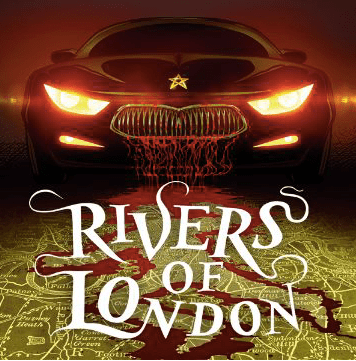
Those of you who are fans of Ben Aaronovitch’s Rivers of London series of books might want to pick up the collected Body Work comic story from Titan comics: it’s an original story about PC Grant and Inspector Nightingale of the met’s special Falcon division (dealing with magic events), which takes place between the events in the novels Broken Homes and Foxglove Summer.

Keep an eye out for the serialised chapters of Rivers of London: Night Witch at your local comics shop.

The good news is there is a new, excellent translation of this 1964 novel by the Strugatsky brothers.
Unlike the earlier translation, which Ken MacLeod had difficulty reading, “No reader of this fine new translation will have that reaction. The story grips from start to finish: a smooth and fast gallop full of colour, adventure, action, and intrigue. Set on a feudal planet entering – and a kingdom being violently held back from entering – its equivalent of the Renaissance, it was at first conceived as an exciting adventure story in the manner of The Three Musketeers, albeit with alien (i.e. in this case human) observers caught up in the caper. The beginnings of a reaction in the early 1960s against the post-Stalin Soviet ‘thaw’ in cultural policy made the authors deepen and darken the tale, to present a strong and subtle argument about morality, politics, and history.” — Ken McLeod’s Introduction to the new translation by Olena Bormashenko
see Strange Horizon’s review by Gautam Bhatia

Трудно быть богом (as they might write in Russian) is the title of a new (2013) film directed by Aleksei German (above), based on the novel by Arkady and Boris Strugatsky.
…it’s utterly compelling and immersive, with every shot a masterclass in old-school in-camera spectacle. In the end this is the one thing that diminishes the film relative to the book, because what the screen version doesn’t have is the novel’s intellectual and moral power — the uniquely science-fictional sense of standing hands-tied in the middle of an entire world’s history with a godlike awareness of the stakes and a tormented mix of revulsion and pity for the sufferings out of which civilisation is born. German trusts the viewer to bring all that if he merely provides the moral chaos and stomach-churning images, which is probably too ambitious an ask. But it’s been so long since ambition in sf cinema was this big that we’d barely noticed how the pictures got so small.
— Nick Lowe, writing in interzone 260
There is a copy in town, and we’re hoping to persuade Cinematheque to screen the film later this year.

One of the delights of the new Doctor Who was the introduction of Professor River Song, played by the wonderful Alex Kingston.
Big Finish have recently released the first of a new series of River Song adventures: four episodes in which she solves a mystery in the nineteenth century, attends a fabulous party aboard a spaceship, outwits the rulers of the universe and teams up with the Eighth Doctor to sort a threat to the universe in her own cheeky, irrepressible style.
No, not the old Abbottt and Costello routine. Just a reminder we’re looking for guest speakers for the first half of the year. If you are passionate about a particular writer, novel, series, character, movie or radio show, and want to talk about it, let us know! We’re always on the lookout for guest speakers.
Stop me if you’ve heard this: a master of time rebels against the ruling council, steals a timeship and sets out to right the wrongs of history with a motley assortment of companions….

makes you wonder if he’s auditioning for the role of Time Lord…
I was reading Adam Roberts’ critical text on SF, Science Fiction, when I came across this quote from Kingsley Amis, one of the old school authors and editors, commenting on the British New Wave from the 60s:
The new mode abandoned the hallmarks of traditional science fiction; its emphasis on content rather than style and treatment, its avoidance of untethered fantasy and its commitment instead to logic, motive and common sense…[instead] in came shock tactics, tricks with typography, one-line chapters, strained metaphors, obscurities, obscenities, drugs, Oriental religions and left-wing politics.
(Amis 1981: The Golden Age of Science Fiction, p22)
Just a gentle reminder that we have Lucy Sussex as guest speaker on march 2nd. She’s here for the Writers Week, and has kindly agreed to talk to us about her recent book Blockbuster!: Fergus Hume and the Mystery of a Hansom Cab. At the turn of the 19th century, The Mystery of a Hansom Cab became an international publishing sensation. In many ways, the story of the publisher is equally fascinating. Turn up at 7pm at Kappys to find out the intriguing details!

Lucy Sussex is the author of a number of novels and short stories; she has worked as a reviewer for The Age, and as an academic, she is a Fellow at the Federation University Ballarat, and La Trobe University.
In 1989 she won her first Ditmar Award for her short story “My Lady Tongue”. She won three further Ditmars, for her novel The Scarlet Rider (1997), novella “La Sentinelle” (2004), and short story “Absolute Uncertainty”. “Merlusine” won the Aurealis Award for Best Fantasy Short Story in 1998, and “La Sentinelle” won an Aurealis Award in 2003. In 2008 her short story “Mist and Murder” won a Sir Julius Vogel Award.
She was a judge for the international James Tiptree, Jr. Award award in 1995, and has subsequently judged the Age, Victorian Premier’s and ASAL gold medal awards.


You must be logged in to post a comment.