
I could see the near future from The Peripheral while driving through the little village of Topanga yesterday – I thought, ‘Ooh, it’s Flynneville.’ Flynneville on the coast. That future in The Peripheral owes a lot to my formative years in quite a small town in southwestern Virginia, adjacent to the bottom of West Virginia and to Tennessee. There’s a lot of childhood material in that thread for me. I’ve also kept track of the region over the decades, and I just extrapolated what’s happened there, like what’s happened to so many small American towns. It’s not just in the South, but there’s a lot of it there. It’s that dissonance between certain kinds of technology being present in places that haven’t moved forward in other ways. There are people in tiny, obscure places who know more about some particular kind of Chinese porcelain than most people in New York do. It’s like any knowledge is unevenly distributed now. You can have these complete otakus in some arcane field of collecting who live in a tiny town in Nebraska, and maybe have never left it, but they still wind up being the world amateur authority on some particular thing.
— William Gibson interview in Locus magazine
Author: kwoll
Troll Bridge Premiere sept 21st
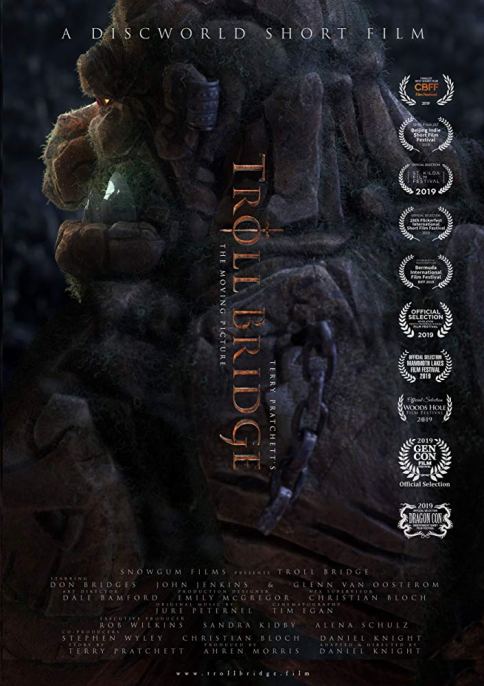
The local Terry Pratchett fan club, City of Small Gods, are hosting the South Australian Premiere of Terry Pratchett’s “Troll Bridge” by Snowgum Films, on Saturday 21st September at the Mercury Cinema.
This may be your only opportunity to see Troll Bridge on the big screen in Adelaide, so don’t miss out!
Buy tickets at trollbridge.cityofsmallgods.org.au
Crit Mass Sept 4th: The Handmaid’s Tale
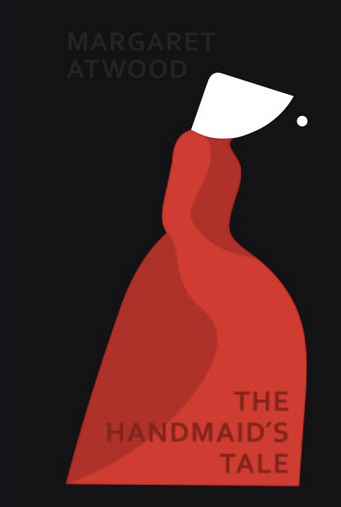 Kate Treloar notes:
For September’s meeting I will examine all things The Handmaid’s Tale – the original 1985 novel by Margaret Atwood, Season 1 of the current television series, and the recently released graphic novel illustrated by Canadian artist Renee Nault. I will bring along a copy of the graphic novel to look at. Parallels with Atwood’s near-future dystopian world and real-world examples will also be explored.
Note: the sequel “The Testaments” is due out on 10 September, shortly after this Critical Mass session, for those who want even more Handmaid.
As usual, 6:45 at Kappy’s (22 Compton St, Adelaide) for a 7pm start!
John Crowley and Crows
“Ka: Dar Oakley in the Ruin of Ymr is a deliberately puzzling title. It’s about a crow who gets the name Dar Oakley through a series of adventures. He’s the first crow to ever have a name, and he claims to have invented names for crows. He’s born sometime in an apparently Celtic world – I never made this specific even to myself – about 2,000 years ago, sometime before the British invasion of Gaul. He was born into a realm where there were no people, because humans had not yet reached there. Very soon in his young years, when human populations start to come into the area, he is fascinated by them and by the kind of things they do – building fires, building houses, running around on two legs, and above all having battles with one another. Killing, but not eating, other humans. The crows cannot figure that part out, but they also realize they’ve discovered a treasure they couldn’t have conceived of. There is wealth beyond the dreams of gluttony laid out before them after these battles, and the humans are glad to have them eating the bodies, as long as it’s the enemy dead. He, Dar Oakley, feels he caused this bounty.
“Dar Oakley now has a big connection with humans, and because of his curious nature, he makes friends with a young human girl. Through a procedure that I think was the only reasonable possible one, they become able to communicate.”
— excerpt from an interview with John Crowley, Lotus Jan 2018
More on R A Lafferty
Last year, UK science fiction publisher Gollancz, which has recently brought out most of Lafferty in digital editions, released a print omnibus of three novels, the utopian parody Past Master, the transcendentally paranoid Fourth Mansions, and the Homeric tall tale Space Chantey. But Lafferty’s novels are notoriously difficult — Fourth Mansions in particular drives the uninitiated to despair — and his stories have drawn more readers and inspired greater praise. This April, Gollancz issued The Best of R. A. Lafferty, a collection of 22 stories that span nearly the whole of the author’s career. Neil Gaiman contributes an appreciative introduction to Lafferty; each story receives at least one introduction, all but one original to this volume, and several include afterwords to boot. Lafferty’s readership may have a reputation for being small, but it’s also illustrious. Introducers include Samuel R. Delany, Michael Dirda, Patton Oswalt, Robert Silverberg, Jeff VanderMeer, Michael Swanwick, Nancy Kress, Connie Willis, and the late Harlan Ellison….
from File770, Pixel Scroll 8/4/19, (1) DISCONTINUED NEXT ROCK
City of Lies

Sam Hawke is Winner of the 2018 Aurealis Award for Best Fantasy Novel, the 2018 Ditmar Award for Best Novel and the 2018 Norma K Hemming Award (for works exploring issues of gender, disability, race or class) for City of Lies, the first in the Poison War series.
There’s an interesting discussion with Sam on tor.com, where she answers reader’s questions:
I guess a closed room murder mystery setup wasn’t that common in fantasy, so that’s probably the most distinguishable thing about the structure of the story.
Or possibly just messing with the all-too-common Western nuclear family model as the foundational family structure of the society—once you take out marriage as a concept and give primacy to other kinds of non-romantic relationships, what happens? (This is something that you don’t see as often as I’d like in speculative genres. We can imagine the most amazing magical things, but absolutely we must pair off and have strict gender roles etc. There are certain assumptions we carry across from our everyday lives unthinkingly which I’d like to see challenged more often).— from Highlights from Sam Hawke’s AMA! on tor.com
Sept 4th Critical Mass: The Handmaid’s Tale
Kate Treloar is considering The Handmaid’s Tale
For September’s meeting I will examine all things The Handmaid’s Tale – the original 1985 novel by Margaret Atwood, Season 1 of the current television series, and the recently released graphic novel illustrated by Canadian artist Renee Nault. I will bring along a copy of the graphic novel to look at. Parallels with Atwood’s near-future dystopian world and real-world examples will also be explored.
Note: the sequel “The Testaments” is due out on 10 September, shortly after this Critical Mass session, for those who want even more Handmaid.
As usual, 6:45 for a 7pm start at Kappy’s,
22 Compton St, Adelaide!
World Fantasy Awards 2019 nominees
The awards will be presented at World Fantasy Con 2019 to be held in Los Angeles October 31-November 3.
2019 Lifetime Achievement Awards
- Hayao Miyazaki
- Jack Zipes
Nominees
Novel
- In the Night Wood by Dale Bailey (John Joseph Adams/Houghton Mifflin Harcourt)
- The Mere Wife by Maria Dahvana Headley (MCD/Farrar, Straus & Giroux)
- The Poppy War by R. F. Kuang (Harper Voyager)
- Witchmark by C. L. Polk (Tor.com)
- Trail of Lightning by Rebecca Roanhorse (Saga Press)
Novella
- The Only Harmless Great Thing by Brooke Bolander (Tor.com)
- The Black God’s Drums by P. Djèlí Clark (Tor.com)
- The Tea Master and the Detective by Aliette de Bodard (Subterranean Press)
- “The Privilege of the Happy Ending” by Kij Johnson (Clarkesworld, Aug. 2018)
- Beneath the Sugar Sky by Seanan McGuire (Tor.com)
Short Fiction
- “The Ten Things She Said While Dying: An Annotation” by Adam-Troy Castro (Nightmare Magazine, July 2019)
- “A Witch’s Guide to Escape: A Practical Compendium of Portal Fantasies” by Alix E. Harrow (Apex Magazine, February 2018)
- “Ten Deals with the Indigo Snake” by Mel Kassel (Lightspeed, October 2018)
- “The Court Magician” by Sarah Pinsker (Lightspeed, January 2018)
- “Like a River Loves the Sky” by Emma Törzs (Uncanny Magazine, March-April 2018)
See the full list at File770
His Dark Materials… coming!

The trailer for the new TV series based on the extraordinary trilogy by Philip Pullman is out! release in our spring…
Continuum Panels on SF fans now online
Two panels about sf fans in the 60s and 70s from recent Continuums have just been published at doxa.podbean.com
SF Fandom in first half of the 1970s
Leigh Edmonds introduces the topic, SF Fandom in the first half of the 1970s, and panel: Rob Gerrand, Robin Johnson and Bruce Gillespie.
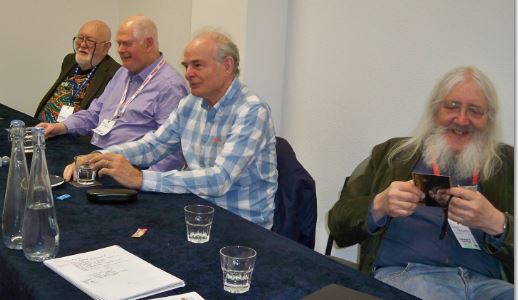
The Panel: Robin, Bruce, Rob and Leigh (Photo: Cath Ortlieb)
and
Sixies SF fandom History panel from Continuum 14
With Lee Harding, Rob Gerrand, Bill Wright and Leigh Edmonds (moderator).
Note: The earlier panel from 2017, MSFC Fan History Panel Continuum 13
is also available for listening here


You must be logged in to post a comment.